Best Time To Visit The Daintree Rainforest: Weather By Month (2026)
Two calendars run over the Daintree: a firm, sunny dry season from May to October and a loud, green wet season from November to April. Here is what each month actually gives you, and how to match the season to the trip you want.
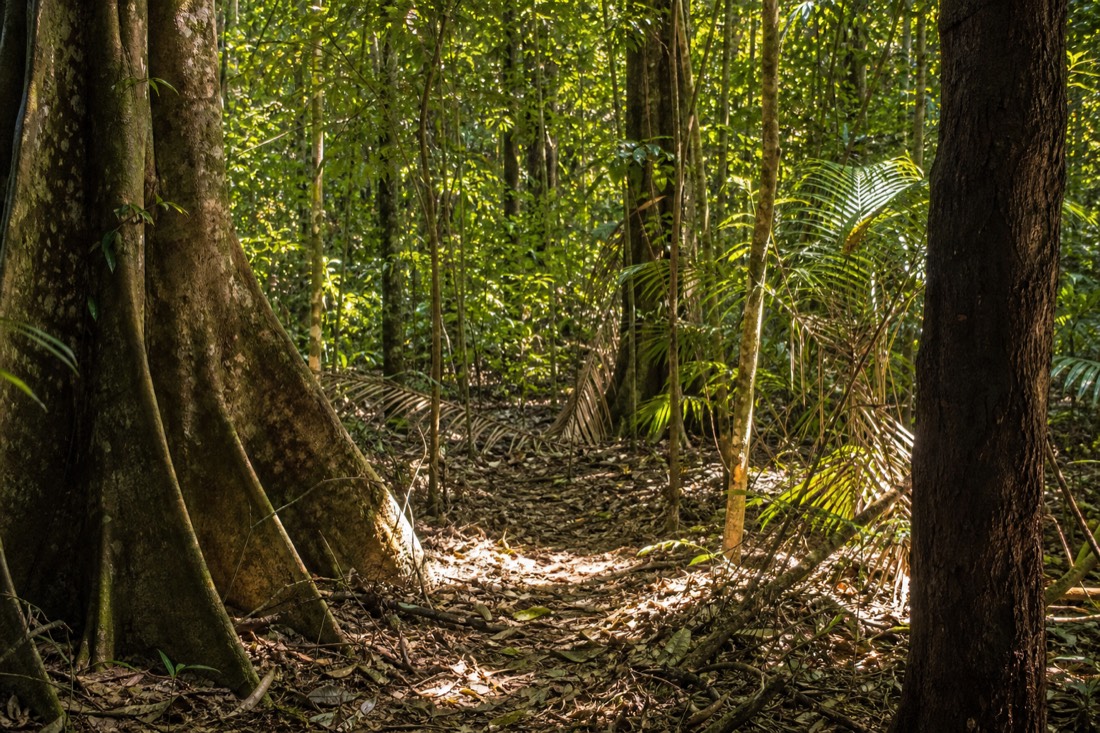
Two calendars run over the Daintree. From May to October the tracks are firm, the river sits calm for the cruise boats, and the light falls through the canopy in clean shafts. From November to April the same forest turns loud and green: waterfalls thicken, the humidity climbs, and the narrow road north of the ferry can close for a day after heavy rain. Which calendar you travel on shapes almost everything, from what you pack to which walks are even open.
Booking Choice: For a classic Daintree day, start with the Daintree and Cape Tribulation tour, which combines rainforest walks, a river cruise and transport from Cairns-area or Port Douglas pickup points.
Check Dates For The Daintree And Cape Tribulation Day TourThis guide takes the year apart month by month, ranks the driest weeks, and matches each season to what you actually want to do, whether that is walking, a river cruise, snorkelling the reef, or simply seeing the forest at its most dramatic.
At a glance: the Daintree across the year
Dry season May to October is the most reliable window, and August is usually the driest month. The green season, November to April, is lush, wetter and far quieter.
When Is The Best Time To Visit The Daintree Rainforest?
The dry season, May to October, is the most reliable window: warm days, low rainfall, firm walking tracks and clear water on the river cruises. Within it, June to September is the pick of the year, and August is usually the driest, sunniest month of all. The green season, November to April, trades comfort for lush drama and far thinner crowds.
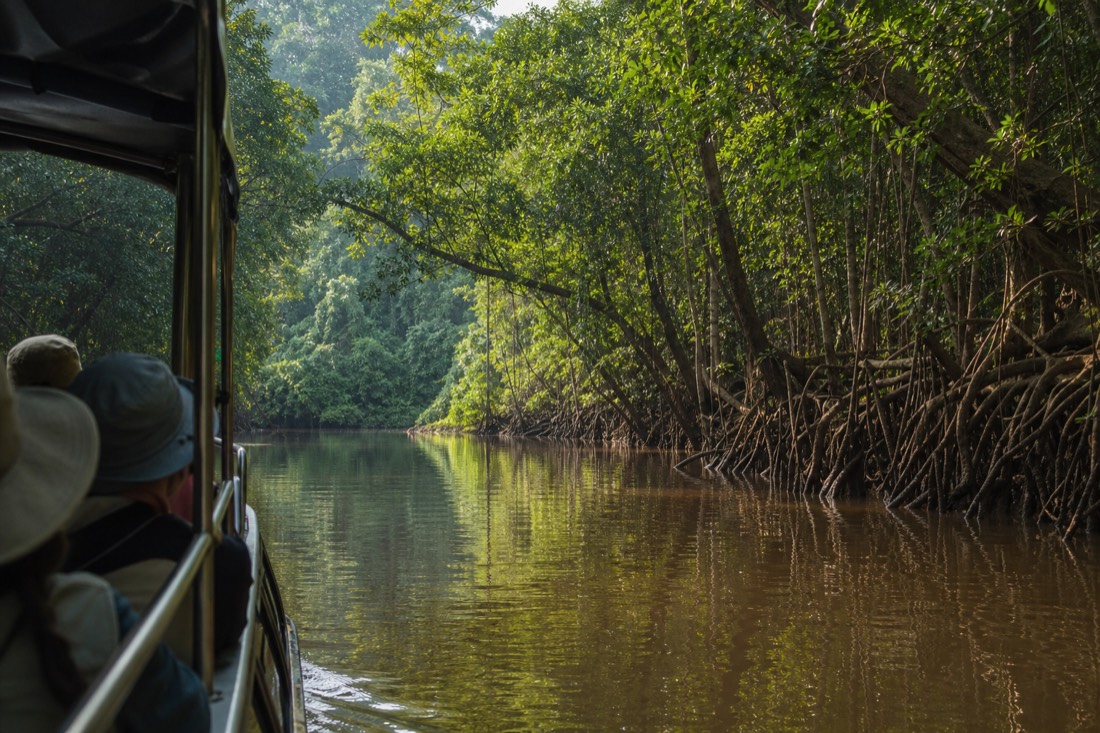
The Daintree is a tropical rainforest, so it rains here in every month of the year, dry season included. The difference is one of degree. A dry-season shower is short and passes; a wet-season downpour can settle in for hours and swell the creeks. If your priority is comfortable walking, calm water for spotting crocodiles, and a low chance of a washed-out day, the middle of the dry season is the safe choice. If you want the forest at full volume, with every waterfall running and the greens almost glowing, the green season delivers that better than any brochure.
Most visitors come up from the coast for the day, so the season also decides how the drive feels. The run from Cairns takes about ninety minutes to Mossman Gorge and two to two and a half hours to Cape Tribulation, and you can read the full route in our guide to the drive up from Cairns and the cable ferry crossing. In the dry, that road is straightforward. In the wet, the section beyond the ferry demands more attention. The full-day trips listed by Daintree Rainforest Tours pack Mossman Gorge, a river cruise and Cape Tribulation into a single day, and they run all year, but the dry season is when the tracks are firmest and the river clearest.
| Season | Months | What you get | The trade-off |
|---|---|---|---|
| Dry season | May to October | Warm sunny days, low rain, firm tracks, clear river-cruise views, comfortable walking | The most people, and higher prices in the July peak |
| Green (wet) season | November to April | Full waterfalls, intense greenery, dramatic skies, very few other visitors | Heat, humidity, muddy trails, heavy rain and the odd road closure |
What Is The Dry Season Really Like, May To October?
Dry-season days are warm rather than hot, with daytime highs generally in the mid to high twenties Celsius and cooler, drier nights. Rain is low and usually brief, humidity drops, and the walking tracks and river cruises are at their best. This is peak visitor season, so book tours and accommodation ahead, especially over the July school holidays.
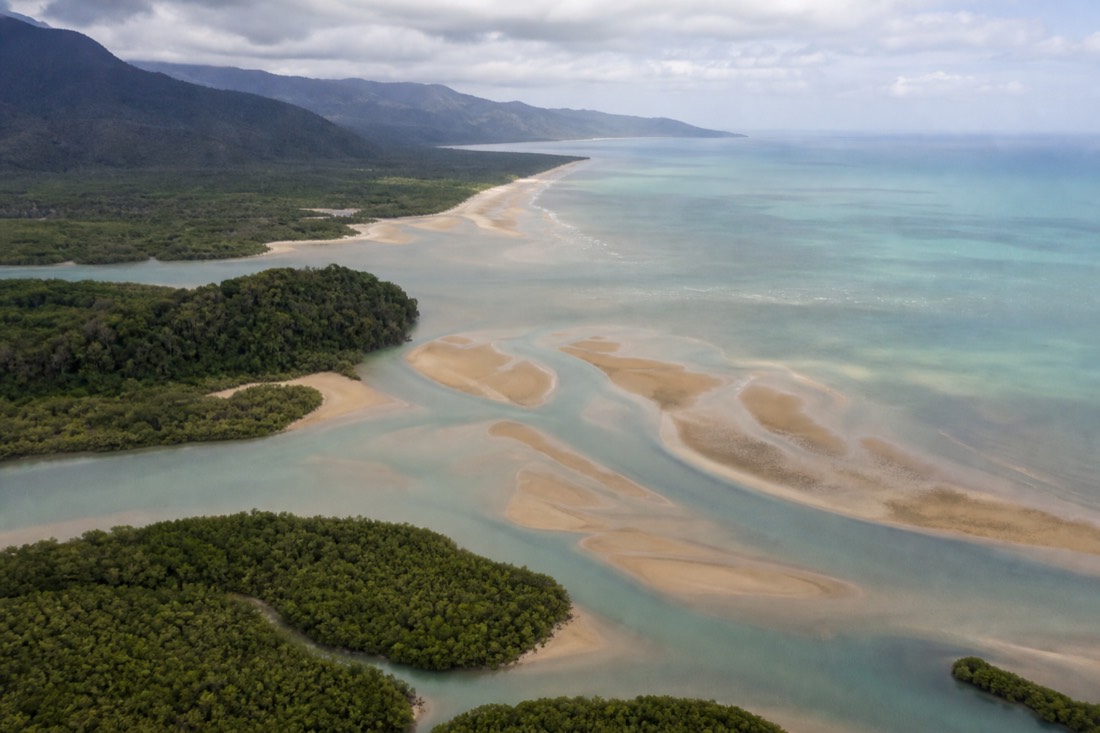
The dry season is the postcard version of the Daintree. Mornings are clear, the river is glassy for the first cruise of the day, and the boardwalks at Mossman Gorge and Cape Tribulation are firm underfoot. Even here you will meet the occasional short shower, because this is still rainforest, but it rarely derails a day. The reward for the reliable weather is company: coach tours from Cairns and Port Douglas fill the popular stops from mid-morning, which is exactly why an early start matters.
Temperatures sit in a comfortable band. Coastal daytime highs are typically around the mid-twenties in June and July and creep up as the dry season ages, while nights can feel almost cool by tropical standards. If you are choosing between bases, Port Douglas sits closer to the forest and saves roughly forty-five minutes of driving each way compared with Cairns, and we compare the two in the guide to choosing between a Cairns and a Port Douglas base.
One quiet advantage of the dry is the light. With less cloud and lower humidity, the canopy shafts and clear river reflections that fill everyone's photos are far more common. Mornings are the exception to the calm, though, because the popular sites fill fast: at Mossman Gorge the boardwalk is quietest and the canopy light best before the Cairns coaches roll in, so an early start may mean fewer visitors at the gorge. The trade-off for all this reliability is that July, tied to the winter school break, is both the busiest and the priciest stretch of the year, so if your dates are flexible, June, August and early September give you the same weather with a little more room.
What Is The Green (Wet) Season Really Like, November To April?
The green season is hot and humid, with daytime highs often in the low thirties Celsius and sticky nights. Rain becomes frequent and heavy, peaking from December to March, when muddy trails, high humidity and the occasional flood or road closure are all part of the deal. In return, the forest is at its lushest and the crowds all but vanish.
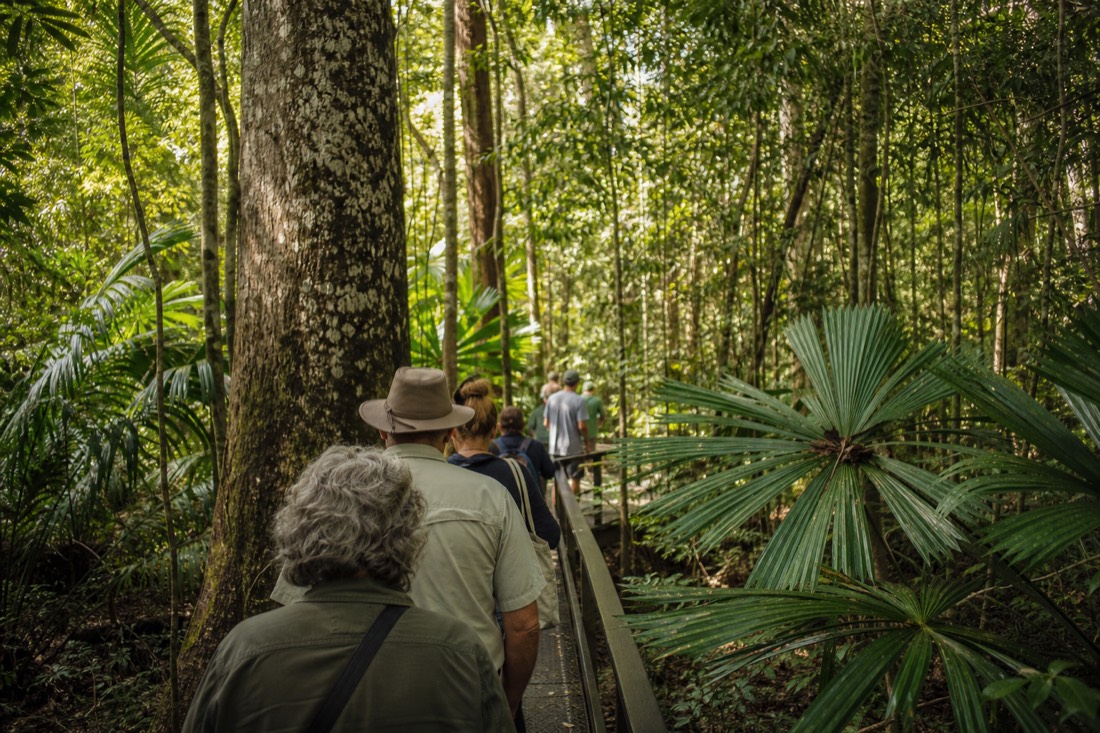
Do not write off the wet. The forest was built by this rain, and it shows: the canopy thickens, moss and ferns swell, frogs call all day, and creeks that trickle in September thunder in January. The peak-wet window, December to March, brings the most rain, the highest humidity and the real chance of a river cruise being affected or a remote road being cut for a day after a big fall. April and November sit either side as gentler shoulder weeks, greener than the dry but calmer than the peak.
The heat is the honest catch. Walking in thirty-degree heat with high humidity is harder work, so plan for early starts, plenty of water and a slower pace. Crowds, though, are a non-issue: this is when you can have a boardwalk almost to yourself. If a downpour keeps you off the tracks, a covered river cruise still runs, and you can weigh up the ancient plants under any weather in our guide to the ancient plants you can still see.
Month By Month: What Is The Weather Like In The Daintree?
The wettest, stickiest months are December through March; April and May ease off as the rain retreats; June to September are the driest, clearest and busiest; October and November begin the slide back toward the wet. August is the standout for dry, sunny weather, with July a very close second.
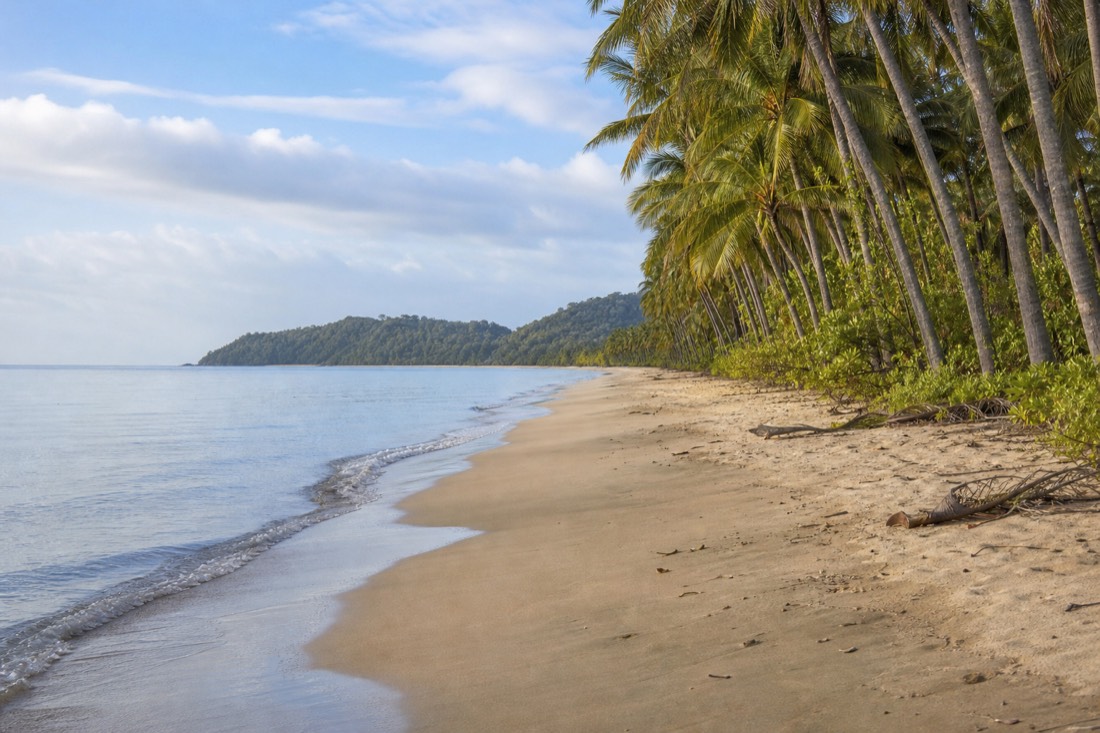
The scorecard below is a planning shortcut, not a forecast. Daytime highs are approximate typical values for the coastal strip near Mossman and Port Douglas, and every month here still sees some rain. Use it to weigh comfort against crowds and against the drama of full waterfalls.
| Month | Typical daytime high | Rain | Crowds | Good for |
|---|---|---|---|---|
| January | around 31°C | Very high (peak wet) | Moderate (Aussie summer holidays) | Waterfalls, storms, empty tracks between showers |
| February | around 31°C | Very high (peak wet) | Low | The greenest forest, near-solitude |
| March | around 30°C | High, easing late | Low | Lush scenery, cheaper travel |
| April | around 29°C | Moderate, dropping | Low to moderate | Green forest with drier spells, good value |
| May | around 28°C | Low (shoulder) | Building | Warm days, thinning crowds, tracks firming up |
| June | around 26°C | Low | Busy | Comfortable walking, clear river cruises |
| July | around 26°C | Low | Busiest (school holidays) | Reliable weather, reef and forest days |
| August | around 26°C | Lowest of the year | Busy | The driest, sunniest window; walking and the reef |
| September | around 28°C | Low, warming | Busy, easing | Warm, dry days as the season turns |
| October | around 29°C | Low, rising late | Moderate | Shoulder value, warm water for the reef |
| November | around 30°C | Rising | Low to moderate | Early green, humidity building |
| December | around 31°C | High, wet returns | Moderate (holidays) | First big waterfalls, festive-season travel |
Which Is The Driest, Sunniest Month?
August is usually the driest, sunniest month in the Daintree: it carries the lowest average rainfall and the highest number of clear days, with comfortable daytime highs of roughly 24 to 28°C and slightly fewer crowds than July. July runs it a very close second, and June and September are both excellent.
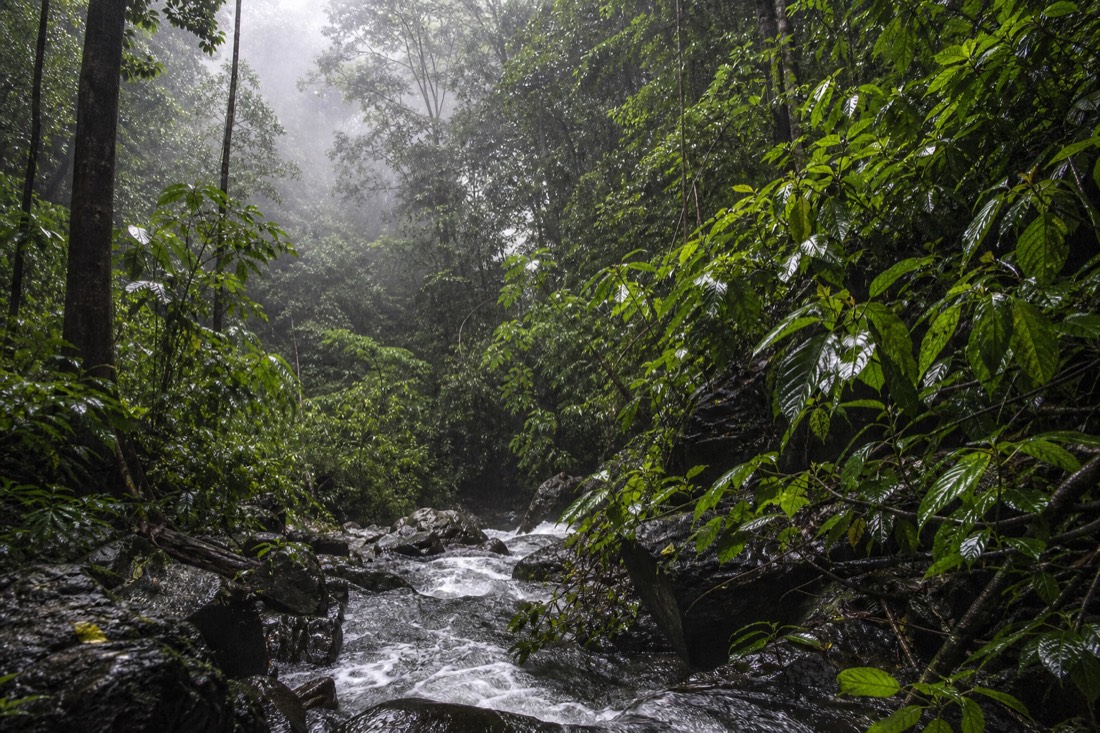
If you can travel on any date and you want the best odds of clear weather, aim for August. It sits in the heart of the dry, after the last of the shoulder-season rain and before the pre-wet humidity builds. June is a touch cooler and equally dry, September is warmer and marks the start of the transition, and either makes a fine alternative if August dates are full. May and October are the shoulder months, drier than the wet but with rain rising toward each end of the season.
| Rank | Month | Why |
|---|---|---|
| 1 | August | Lowest average rain, most sunny days, slightly quieter than July |
| 2 | July | Just as dry, but the busiest month thanks to school holidays |
| 3 | June | Dry and a little cooler, comfortable for long walks |
| 4 | September | Warm, dry and easing crowds as the season turns |
When Is Stinger Season, And Can You Swim?
Marine stingers, including box jellyfish and the tiny Irukandji, are a warm-water risk along the tropical coast, roughly from November to May, though the exact start and end shift year to year. Do not treat those dates as fixed: check current beach and marine-stinger advice before any sea swim. Freshwater is not affected by marine stingers, but it is not automatically safe: QPWS does not recommend swimming at Mossman Gorge, and crocodiles may occur in fresh or clear water.
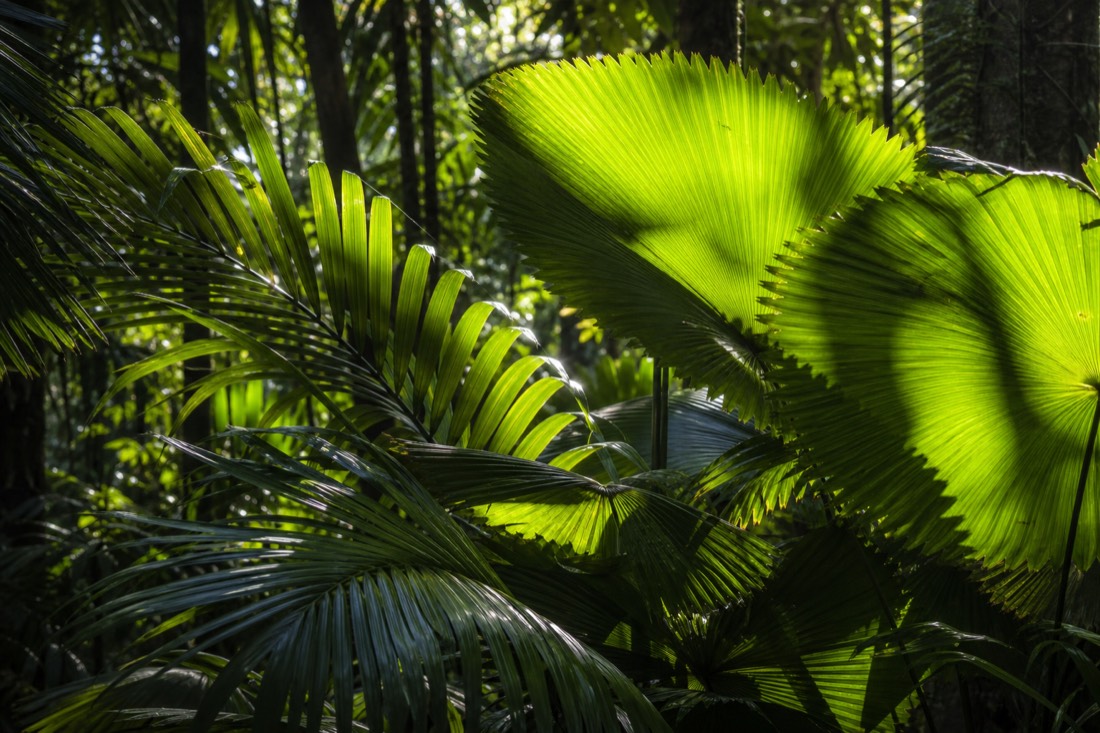
Two very different water risks sit side by side here. The coastal one is marine stingers in the warmer months; because the season moves and can start early or run late, the honest advice is to check the latest local guidance rather than trust a calendar. The other risk is constant and has nothing to do with the season: the Daintree River and its estuaries are crocodile habitat, and you never swim there. For a fuller answer on current swimming guidance, see our piece on freshwater and coastal swimming risks.
Freshwater sites are not affected by marine stingers, but clear or cold water does not establish safety. QPWS does not recommend swimming at Mossman Gorge because of unpredictable currents and submerged hazards. Crocodiles may occur in fresh or clear water, so appearance is not proof of safety. At Cassowary Falls, any swim is optional and depends on operator approval, weather and current conditions; it is not certified or guaranteed safe.
| Where | When it is a concern | What to do |
|---|---|---|
| Ocean beaches | Warmer months, roughly November to May (dates vary) | Check current stinger advice; wear a stinger suit; heed local signage |
| Daintree River and estuaries | All year | Never swim; this is crocodile habitat |
| Mossman Gorge freshwater pools | Currents and submerged hazards can occur year round | QPWS does not recommend swimming, regardless of water appearance |
| Private waterfalls | Conditions and crocodile risk cannot be judged by water appearance | Enter only if the operator permits it after a current assessment; no safety guarantee applies |
Marine stingers and crocodile habitat make the beaches unsuitable for casual swimming. QPWS advises not entering Mossman Gorge water. Any operator-led private-waterfall swim remains dependent on current conditions.
When Are Cassowaries And Crocodiles Most Active?
For both, timing beats luck. Cassowaries are most often seen at dawn and in the first hour or two after sunrise, and again toward dusk; crocodiles bask on the banks on cool mornings, which is why river cruises depart early. The middle of the day, hot and busy, is the worst window for either.
The southern cassowary is the forest's signature bird, a large flightless creature found only in the Daintree region and parts of New Guinea, and the animal that keeps the rainforest seeding itself. Sightings are never guaranteed, a day without one is normal, but your odds rise sharply if you are out early. Overnight visitors and early tours see them roadside before the coach traffic arrives; you can read more about them and the rest of the fauna in our guide to the rainforest wildlife you can hope to see.
Estuarine crocodiles are genuinely wild and genuinely dangerous, and the river is their habitat. On a typical morning cruise the guides point out one to three, sometimes basking to warm up in the early sun, which is why the first departures of the day tend to be the most productive. Overcast, humid conditions can actually help wildlife spotting, because animals stay active rather than retreating into the shade.
| Animal | Best time of day | Best season | Note |
|---|---|---|---|
| Southern cassowary | Dawn and early morning; dusk second-best | Year round; roadside sightings common early | Solitary and unpredictable; never approach |
| Estuarine crocodile | Cool mornings, basking on banks | Year round; easier to spot in calm dry-season water | Only from a boat, at a respectful distance |
| Birds and tree dragons | Early morning | Year round; high chance on guided walks | Kingfishers, sea eagles, Boyd's forest dragons |
| Tree kangaroos | Early morning or late afternoon | Year round; rare either way | A genuine stroke of luck to see |
What Does The Green Season Give You That The Dry Does Not?
The green season, November to April, gives you full waterfalls, forest at its most saturated green, dramatic storm skies and quieter stops than in July. The cost is heat, humidity, mud and the small risk of a rained-out day or a closed back road.
There is a real case for the wet, and it is not only about price. Waterfalls that are a modest trickle in the dry become genuine cascades after summer rain. The greenery is at a level the dry season never reaches. And the quiet is a luxury in itself: you can stand on a boardwalk with only birdsong for company, which almost never happens at the height of winter. Photographers, in particular, often prefer the moody light and running water.
Set that against the discomfort. The peak-wet stretch is hot and sticky, trails turn muddy, and a very heavy fall can affect a river cruise or briefly cut the unsealed roads north of Cape Tribulation. If you travel then, keep the itinerary flexible, start early to beat the heat, and treat a wet afternoon as a reason to slow down rather than a lost day.
When Should You Come For Walking, And When For The Reef?
For walking, come in the dry season, June to September, when tracks are firm and the heat is manageable. For the reef off Cape Tribulation, the water is warm and inviting almost year round, but you weigh the calmer, clearer dry-season conditions against warm-month marine stingers. August threads both needles better than any other month.
Walking and reef time pull in slightly different directions. Long boardwalk and rainforest walks are simply more pleasant in the dry, when you are not fighting mud and humidity. The reef is more forgiving of season, because a snorkel trip from Cape Tribulation runs to the outer reef in most conditions, but sea state and water clarity are generally better in the dry, and the warmer months bring the stinger consideration covered above. If a reef day is the goal, look at snorkelling the reef off Cape Tribulation to see how it fits a Daintree trip.
| Activity | Best months | Why |
|---|---|---|
| Rainforest walks and boardwalks | June to September | Firm tracks, lower humidity, comfortable temperatures |
| Daintree River wildlife cruise | All year; best May to October | Calm, clear dry-season water; runs covered in the wet |
| Reef snorkelling from Cape Tribulation | Year round; clearest in the dry | Warm water; weigh warm-month stingers and sea state |
| Waterfalls and freshwater conditions | December to April for volume | Summer rain can increase flow; assess each site and follow closures or operator instructions |
Do Roads And Tours Close In The Wet Season?
The main sealed road and the cable ferry run year round, and guided day tours operate in every season. What can close in the wet is the unsealed back country: the Bloomfield Track and other rough roads north of Cape Tribulation may be cut for a day or two after heavy rain, and a big storm can affect a river cruise. Mainstream tours are rarely stopped for long.
The sealed route from Cairns through Mossman to the ferry and on to Cape Tribulation stays open all year, and standard rental cars handle it, ferry included; four-wheel drive only matters for the rough tracks. The one part of the region that genuinely closes in the wet is the unsealed Bloomfield Track beyond Cape Tribulation, which the 4WD adventure routes use, and you can read about that road in our guide to the Bloomfield Track and off-road country.
For a normal visit, the practical upshot is simple. In the dry, everything runs to schedule. In the wet, build in a spare day if you can, and understand that a full-day guided trip may adjust its order to work around the weather rather than cancel. If a rushed single day worries you, our post on how many days you need lays out the options.
A tour booking does not establish that roads or ferries are operating. Check the current service and park notices for your travel date; severe weather can change access and itineraries.
So Who Should Come When?
First-time visitors who want reliable weather and the classic highlights should come June to September, and August if they can. Photographers, budget travellers and anyone chasing waterfalls and solitude should look at the green season, especially the April and November shoulders. Reef-focused trips work best in the dry.
There is no single right answer, only the right match to your priorities. Weigh comfort and certainty against drama and quiet, then pick the window that fits. Whatever season you land on, an early start does more for your day than the calendar does, because it beats both the heat and the crowds. To pin down where all this happens before you plan the drive, see our guide to where the Daintree Rainforest sits on the map, and pack for rain in any month using what to pack for the wet.
| You are | Come in | Because |
|---|---|---|
| A first-time visitor wanting the classic day | June to September | Reliable weather, firm tracks, everything open |
| Chasing the driest, sunniest weather | August (July a close second) | Lowest rain, most clear days |
| A photographer or waterfall hunter | December to April | Full falls, saturated greens, storm skies |
| On a budget or craving solitude | February, March, or the shoulders | Lowest prices and the fewest people |
| Here mainly for the reef | Dry season, ideally August | Calmer, clearer water; fewer stinger worries |
| Travelling with young kids | Dry season, outside the July peak | Cooler, drier, less crowded than mid-winter |
The region sits inside the Wet Tropics of Queensland, a UNESCO World Heritage Area, and both the Wet Tropics Management Authority and Tourism Australia's Daintree guide are good places to sanity-check current conditions before you travel.