Daintree Rainforest Plants: Fan Palms, Strangler Figs And Ancient Flora
The Daintree is a living record of how plants evolved. Fan palms, strangler figs, tree ferns and ancient flowering-plant lineages occur across different rainforest habitats, with walking conditions and access varying by location. Here is what to look for and where.
Pull a single leaf out of the Daintree and you are holding a page from the deep history of plants. This forest kept growing while the dinosaurs died out, while other rainforests came and went, while the continent it rides on drifted north into the tropics. Very little green on Earth carries that kind of memory, and here it grows right up to the edge of a maintained boardwalk.
Booking Choice: Choose the Daintree Discovery Centre Pass for a plants-first, self-guided visit with interpretive trails, an aerial walkway and a canopy tower.
Check Dates For The Daintree Discovery Centre PassThis is a guide to the plant life you can actually see, and why it matters more than a pretty backdrop. We go through fan palms, strangler figs, tree ferns, the ferns that live in the treetops, the ancient flowering plants, the mangroves at the river, and the strange bird that keeps the whole system seeded. Along the way we point you to the walks where each is easiest to find.
At a glance: three plants that tell the Daintree's story
Three signature plants of the Daintree that visitors commonly look for from maintained rainforest walks. Individual sightings are not guaranteed.
Why Do The Daintree's Plants Matter So Much?
The Daintree is a living record of plant evolution. Its communities carry direct lines back to Gondwana, the ancient southern supercontinent, and the region holds one of the highest concentrations of primitive flowering-plant families found anywhere on Earth. Ferns, palms and early flowering plants here survived the extinction event that wiped out the dinosaurs, which is why botanists treat this forest as a reference library.
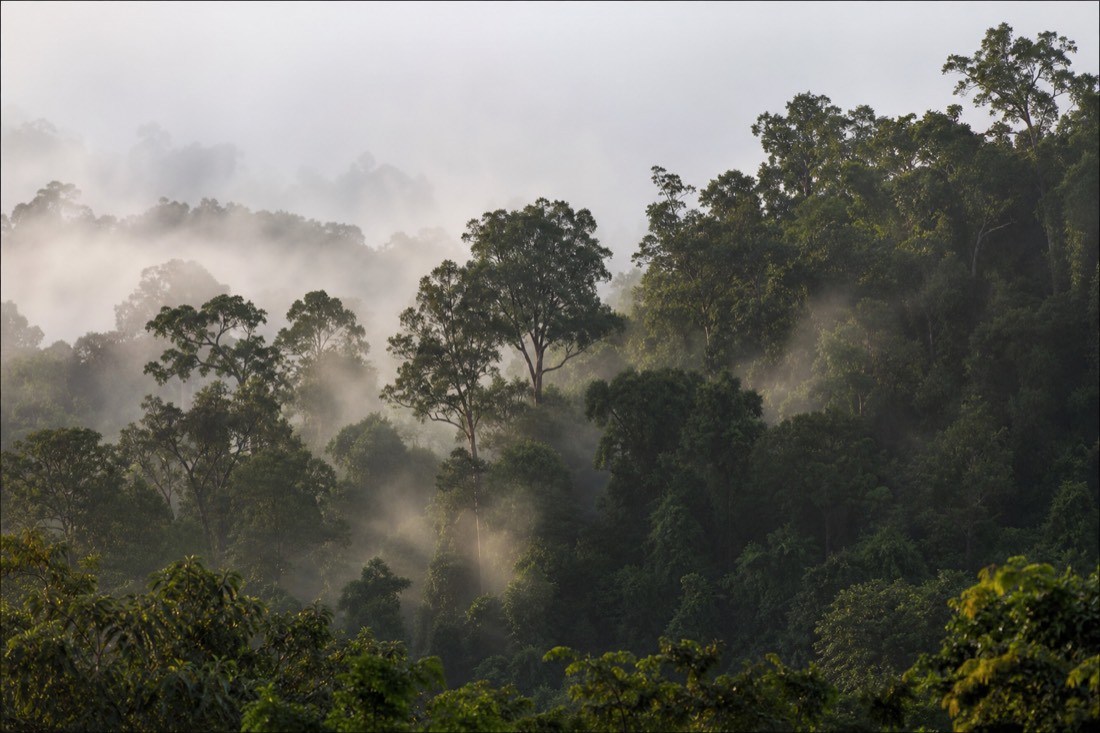
Age is the usual headline, and this forest is often described as over 180 million years old as a lineage, one reason it is called the oldest surviving tropical rainforest on the planet. The number matters less than what it means: unbroken time. Because the rainforest never fully disappeared through the great climate swings, plants that vanished elsewhere kept going here, generation after generation, in the same wet valleys.
That is why the whole area is protected as part of the Wet Tropics of Queensland World Heritage listing, and why the science behind the trail signs is overseen by the Wet Tropics Management Authority. You are not looking at a garden. You are looking at survivors.
There is a second, older layer of knowledge here too. The Kuku Yalanji people, Traditional Owners of this country, have used these plants for food and medicine for tens of thousands of years, and their understanding of which species heal, feed or harm long predates any botanical name. On the Mossman Gorge boardwalk, guides point out plants with documented medicinal use, a reminder that this forest has been read and cared for far longer than it has been studied.
What Plants Should You Look For, And Where?
The shortlist is easy to carry in your head: licuala fan palms, strangler figs, tree ferns, basket and staghorn ferns in the canopy, the primitive flowering plants of Noah Valley, and mangroves at the river and coast. Each has a habitat it favours, so knowing where to look turns a green wall into a set of species you can name.
You do not need a botanist to find most of them. The boardwalks at Mossman Gorge and Cape Tribulation, and the walkways of the interpretive centre, put nearly all of these within reach of an easy stroll. The table below is your field list; the sections after it explain what each one is doing.
| Plant | What to look for | Where to find it |
|---|---|---|
| Licuala fan palm | Huge circular pleated fronds | Fan palm groves, Cape Trib, Noah Valley |
| Strangler fig | A lattice of roots wrapping a host tree | Boardwalks, Mossman Gorge |
| Tree fern | A fibrous trunk topped with a fern crown | Cool gullies, gorge, Tablelands |
| Basket and staghorn ferns | Ferns perched high in tree forks | Canopy walks and boardwalks |
| Primitive flowering plants | Unremarkable-looking ancient shrubs | Noah Valley, protected pockets |
| Mangroves | Prop-rooted trees at the water's edge | Daintree River mouth, Cape Trib |
| Medicinal plants | Species used by the Kuku Yalanji | Mossman Gorge boardwalk |
What Are Gondwanan Plants, And Why Is The Daintree Full Of Them?
Gondwanan plants descend from lineages that grew on the ancient southern supercontinent of Gondwana, before it broke into today's Australia, South America, Africa, India and Antarctica. The Daintree is thick with them because the rainforest here persisted while the world changed around it, so plant families with no living relatives anywhere else kept surviving in these valleys.
Think of it as a refuge that never closed. When the climate dried and cooled, rainforest retreated to the wettest pockets, and this coast was one of them. The plants that made it through are a roll-call of survivors: tree ferns whose form predates flowers, cycads that reproduce with cones rather than blooms, and early flowering plants that sit near the base of the whole flowering-plant family tree.
| Plant group | Why it is ancient |
|---|---|
| Tree ferns | A growth form little changed since the age of the dinosaurs |
| Cycads and zamia | Palm-like seed plants from before flowers existed |
| Primitive flowering plants | Among the earliest flowering-plant lineages |
| Fan palms | A long-lived group with deep Gondwanan roots |
| Ancient conifers | Cone-bearing lineages older than flowering plants |
What Are Licuala Fan Palms?
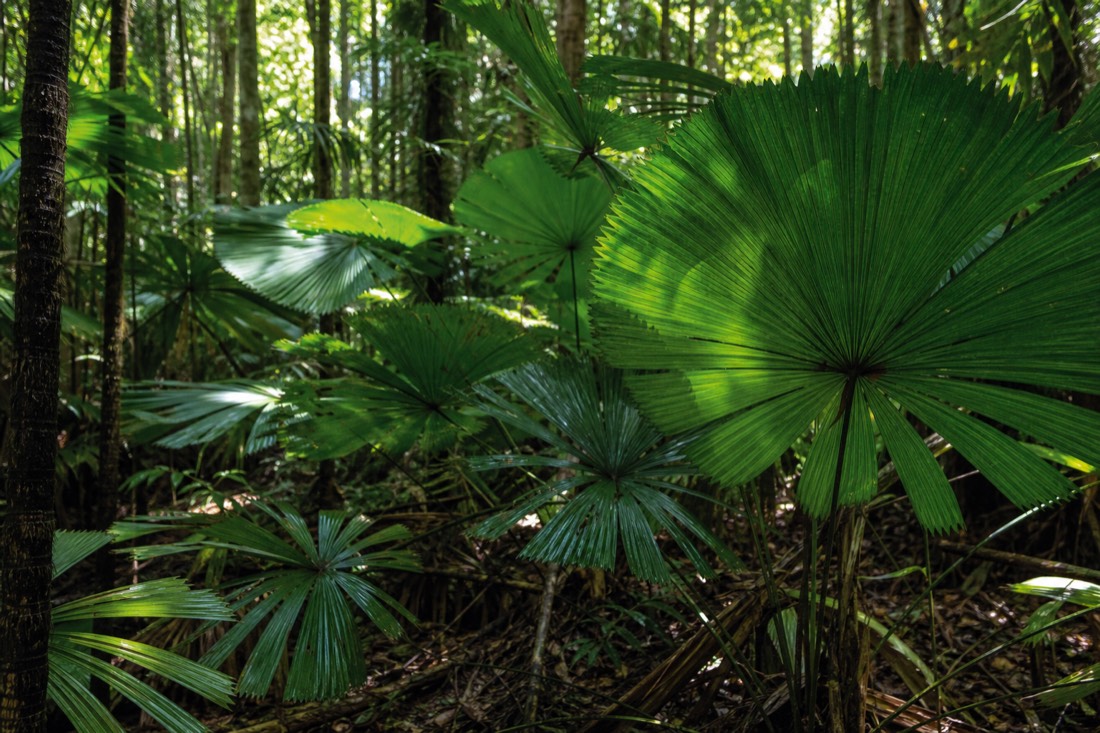
Licuala fan palms are the signature plant of the Daintree floor: their fronds are near-perfect circles, pleated like a folded paper fan and big enough to shelter under in a downpour. They grow in dense groves where light breaks through, and a stand of them, backlit, is one of the most photographed sights in the whole forest.
Beyond the looks, the fan palm is a lesson in how this forest handles rain and shade. The wide fronds funnel water to the base of the plant and catch what little light reaches the understorey. Groves of them form where a gap in the canopy lets the young palms get going, which is why you often meet them in clusters rather than singly.
They are easiest to look for along suitable flatter rainforest paths, and our guide to guided rainforest walks and boardwalks lists relevant trails and groves. Noah Valley is another pocket associated with fan palms and ancient flowering-plant lineages. The verified Port Douglas small-group tour includes Noah Valley entry and guided walks, but does not guarantee a named plant sighting.
How Do Strangler Figs Work?
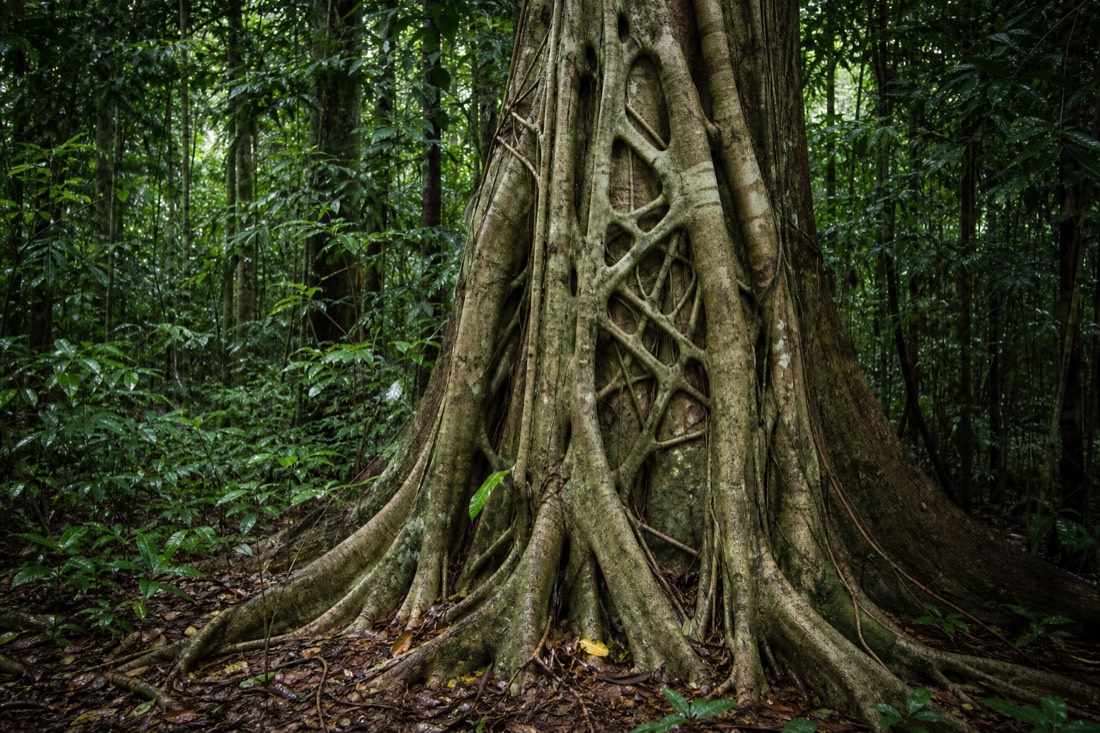
A strangler fig begins life as a seed dropped high in another tree, often in a bird's droppings. It sends roots down the host's trunk to the ground, thickens them into a cage, and over decades wraps the host so completely that the original tree dies and rots away, leaving the fig standing as a hollow lattice around empty space.
It sounds brutal, and it is, but it is also one of the forest's great recyclers. The hollow left behind becomes a home for bats, birds and climbing animals, and the fig's fruit feeds a long list of species. On the boardwalks you can often see the whole story in a single plant: the woven roots, the gap where the host used to be, and a crown of leaves far overhead.
Mossman Gorge is a well-known place to look for mature strangler figs from rainforest walking tracks. Our full write-up of what to see at Mossman Gorge flags the standout trees. Check current track conditions and individual access needs rather than assuming every route is easy.
What Are Tree Ferns, And How Ancient Are They?
Tree ferns are ferns that grow a trunk, topped with a spreading crown of fronds, and their form has barely changed since the age of the dinosaurs. They favour cool, wet gullies and the shaded edges of creeks, and standing among a stand of them is the closest a walk in the Daintree comes to time travel, because a dinosaur would have recognised the scene.
Unlike a flowering plant, a fern reproduces with spores, a strategy far older than seeds or blossoms. That deep age is exactly why they matter here: the Daintree preserves the whole sweep of plant history, from these spore-bearers up through the cycads to the earliest flowers. Cooler, wet gullies, including suitable Tablelands habitats, are the places to look for tree ferns. The current listings do not establish a dedicated tree-fern tour or a stop at especially tall specimens.
If the sheer age of this forest fascinates you, and you want the honest version of the numbers, read how old the Daintree rainforest really is. The short answer is that different measures give different figures, and the tree ferns are part of why.
What Grows Up In The Canopy: Epiphytes And Basket Ferns?
Not every plant here roots in the ground. Epiphytes grow perched on other plants, high in the forks and along the branches, gathering water and nutrients from rain and debris rather than soil. The most striking are the basket and staghorn ferns, which form great nests in the treetops, plus orchids and mosses that turn a bare branch into a hanging garden.
Epiphytes are how the forest packs so much life into a limited floor: it builds upward, storey on storey. A basket fern high in a tree fork is its own little ecosystem, trapping leaf litter that rots into soil, holding water through dry spells, and feeding insects that in turn feed birds. You often cannot see them from directly below, which is exactly why height helps.
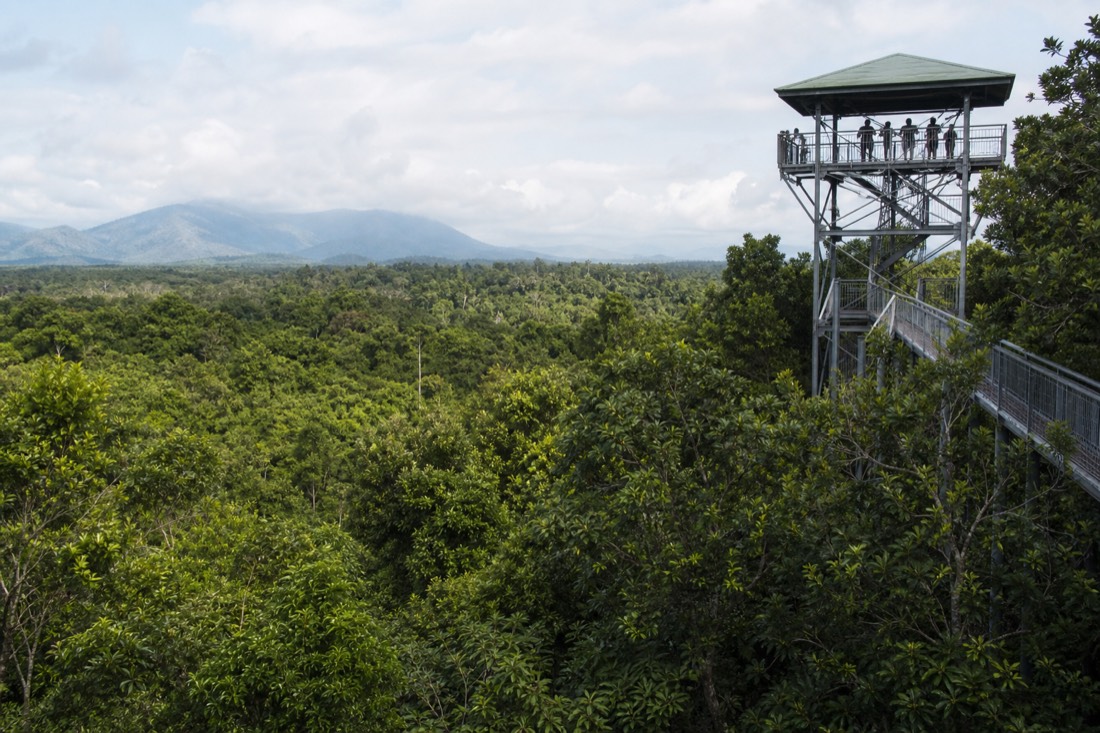
The interpretive centre north of the river is built to solve that problem, lifting you into the mid-canopy on an aerial walkway. Our guide to the Daintree Discovery Centre's canopy tower explains how to get eye to eye with the epiphytes that a ground-level walk only hints at.
How Do Daintree Plants Survive The Wet And The Shade?
Life on a dim, drenched forest floor forces clever design, and Daintree plants show it everywhere. Leaves taper to drip tips that shed heavy rain before fungus can take hold. Tall trees flare into buttress roots for balance in thin soil. Some flower straight from their trunks, a trick called cauliflory, and stilt and aerial roots let plants breathe in waterlogged ground.
Once you know the tricks, you start reading the forest instead of just admiring it. That pointed leaf is managing rainfall. That fin of wood at the base of a giant is holding it upright where the roots cannot go deep. The fruit sprouting oddly from a bare trunk is placed exactly where a ground-dwelling animal, or a cassowary, can reach it. Nothing here is decoration; it is all solving a problem.
| Adaptation | What it does |
|---|---|
| Drip tips | Pointed leaves shed heavy rain fast, keeping fungus off |
| Buttress roots | Wide flared bases steady tall trees in shallow soil |
| Cauliflory | Flowers and fruit grow straight from the trunk |
| Stilt and aerial roots | Extra anchorage and air in waterlogged ground |
| Large fronds | Catch what little light reaches the shaded floor |
These adaptations are easiest to spot with someone to point them out, which is one more reason the interpreted boardwalks beat a solo wander for a first visit. A guide turns a wall of green into a working machine you can follow.
What Is The Idiot Fruit, And Why Is It Special?
Among the Daintree's ancient flowering plants is a rare tree whose primitive fruit earned it the nickname the idiot fruit, because animals that eat its large toxic seeds can come to harm. Botanically it is a treasure: a survivor from near the base of the flowering-plant family tree, a living clue to how the first flowers on Earth may have worked.
Plants like this are the reason scientists describe the Daintree as holding some of the world's most primitive flowering plants. They do not look dramatic, often just an unassuming shrub or small tree, which is part of the charm: the most important plant on a walk can be the plainest one, and you might pass it without a guide to point it out.
Noah Valley is a notable pocket for primitive flowering plants. The verified small-group tour from Port Douglas includes Noah Valley entry and guided rainforest walks, but its record does not guarantee the idiot fruit, another named plant specimen or specialist botanical interpretation.
What Role Do Mangroves Play At The River And Coast?
Mangroves are the salt-tolerant trees that fringe the Daintree River and the coast, standing on tangled prop roots that hold the mud and break the tide. They are a nursery for fish and crabs, a filter for the water heading to the reef, and a favourite haunt of the estuarine crocodile, which is exactly why you meet them best from a boat.
Where the freshwater forest meets the sea, the mangroves take over, and the transition is one of the region's quiet marvels. Their roots trap sediment that would otherwise smother the reef offshore, and their propagules, long seedlings that drop and float, ride the tides to colonise new mud. On the river you glide past walls of them while kingfishers work the edges.
Mangroves also do quiet, unglamorous work that keeps the whole coast healthy. They lock up carbon at rates that put many forests to shame, buffer the shore against storm surge, and shelter the young stages of fish that later swim out to the reef. Standing on stilts in salt water that would kill most trees, they are as much a marvel of survival as anything deeper in the forest.
To see this world up close, and the crocodiles that rule it, our guide to Daintree River cruises and crocodile spotting covers the best departures. The mangrove edge is where the plant story and the wildlife story become the same story.
How Does The Cassowary Shape The Forest's Plants?
The southern cassowary is the forest's gardener. This large flightless bird is one of the few animals big enough to swallow the fruits of certain rainforest trees whole, then carry and drop the seeds intact, far from the parent plant. Some of the Daintree's trees depend so heavily on it that losing the cassowary would slowly change the forest itself.
That is why the bird is often called the architect of the rainforest. Seeds too big for smaller animals get moved and planted only because a cassowary ate the fruit and walked on. Other plants ride different routes: figs travel in the droppings of smaller birds, mangroves float on the tide, and countless understorey species rely on wind, water and gravity down the slopes.
| Plant | How it spreads |
|---|---|
| Large-fruited rainforest trees | Cassowary swallows the fruit; seeds pass intact |
| Strangler figs | Bird droppings lodge seeds high in host trees |
| Fan palms | Fruit eaten by birds and animals, seeds dropped nearby |
| Mangroves | Buoyant propagules float out on the tides |
| Understorey plants | Wind, water and gravity across the slopes |
The plants and the animals are one system, not two. For the birds, dragons and mammals that keep it turning, see our guide to the wildlife of the Daintree.
Where Are The Best Places To See Daintree Plants?
Four places give you nearly the whole cast: the Mossman Gorge boardwalk for figs and medicinal plants, the Cape Tribulation boardwalks for fan palms and mangroves, the interpretive centre for a floor-to-canopy view, and Noah Valley for primitive flowering plants. Walking surfaces, distances and accessibility vary by location, and no listed tour guarantees a named specimen.
The guided rainforest walks and boardwalks guide can help you compare interpreted and independent routes. A good guide can help distinguish species and plant structures that are easy to walk past. Around the walks and boardwalks of Cape Tribulation you also get the coastal story, forest running into mangrove running into sea.
| Place | What grows there | Access |
|---|---|---|
| Mossman Gorge boardwalk | Strangler figs, ferns, medicinal plants | Check current track conditions and individual access needs |
| Cape Tribulation boardwalks | Fan palms, mangroves, coastal forest | Check current track conditions and individual access needs |
| Daintree Discovery Centre | Labelled plants from floor to canopy | Make your own way and account for the Daintree River Ferry |
| Noah Valley | Primitive flowering plants, fan palms | Available on some guided routes; named specimens are not guaranteed |
| Daintree River mangroves | Prop-rooted mangroves | Viewed by cruise boat; access to individual jetties varies |
How Do You Tell The Signature Plants Apart?
Three plants do most of the work of making the Daintree look like the Daintree, and each has a giveaway. A licuala fan palm is a round, pleated frond like a giant hand fan. A strangler fig is a woven cage of roots around a trunk or a hollow. A tree fern is a fibrous trunk with a crown of fronds on top. Learn these three and half the forest names itself.
Once you have them, the rest follows. Look up and the nests in the branches are basket and staghorn ferns. Look to the water's edge and the trees on stilts are mangroves. The plain shrub the guide stops at, the one you would never have noticed, is likely one of the ancient flowering plants that make this forest globally rare.
| Plant | How to recognise it | Look here |
|---|---|---|
| Licuala fan palm | Round, pleated frond like a fan | The forest floor in groves |
| Strangler fig | Lattice of roots caging a host | Along the boardwalks |
| Tree fern | Fibrous trunk with a fern crown | Cool creek gullies |
| Basket fern | A nest of fronds in a tree fork | Up in the canopy |
When Is The Forest At Its Most Lush?
The plants look their most dramatic in the green season, from November to April, when heat and heavy rain push growth, wake the fungi and leave every leaf dripping. The dry season, May to October, is easier for walking and gives clearer light, and different species flower and fruit at different times, so there is no dead month for a plant lover.
If botany is your reason for coming, the wet season rewards it, provided you accept the humidity and the odd flooded trail. If comfort matters more, the dry is kinder and the boardwalks are firmer underfoot. Either way the ancient bones of the forest, the figs, the ferns, the palms, are there year-round. For a month-by-month breakdown, see the best time to visit the Daintree and plan around what you most want to see.
| Season | The forest | Note |
|---|---|---|
| Green (Nov to Apr) | Peak growth, fungi, dripping green | Humid and lush, occasional flooded trails |
| Dry (May to Oct) | Firmer walking, clearer light | Flowering and fruiting vary by species |