Daintree Discovery Centre: Canopy Tower And Aerial Walkway
At Cow Bay, north of the Daintree River, an award-winning centre lets you walk the forest from the floor to above the canopy: a ground-level boardwalk, an aerial walkway among the treetops and a 23-metre tower. Here is what to see, how to reach it and how long to give it.
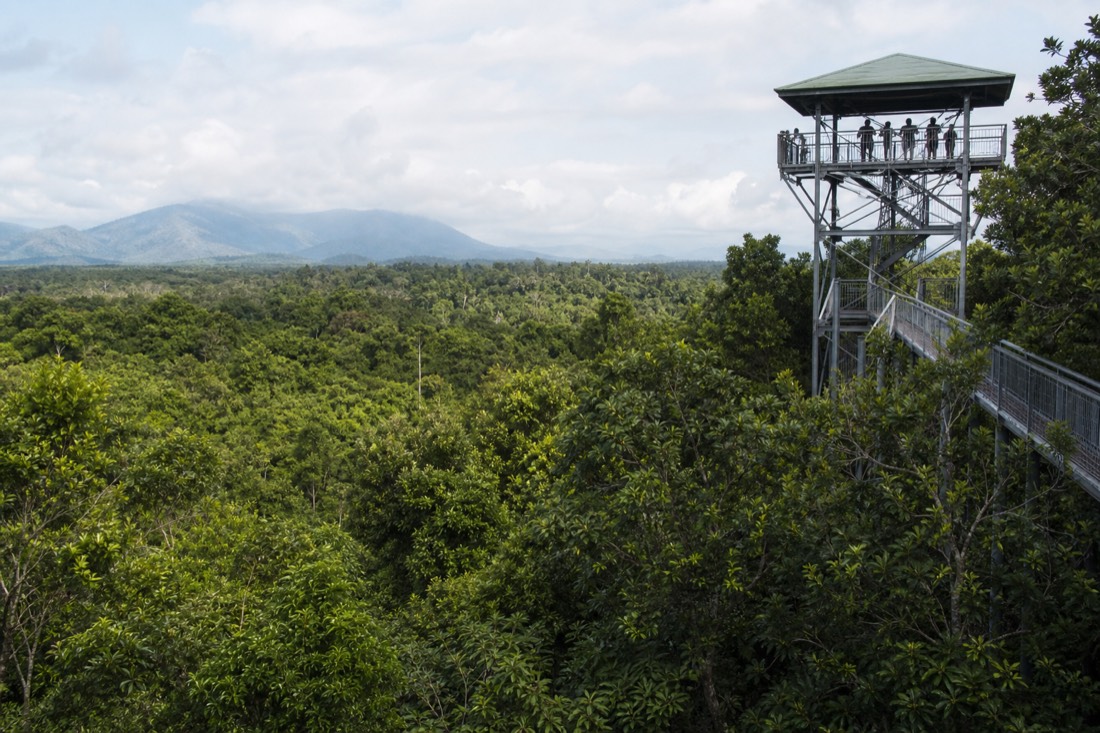
Most of the Daintree keeps its best stories up high, out of reach, in a canopy you crane your neck at from a muddy track. The Discovery Centre exists to fix exactly that. At Cow Bay, a short drive north of the river, a private interpretive centre lets you climb from the forest floor to above the treetops and read what you are looking at as you go.
Booking Choice: Book the self-guided Discovery Centre pass for direct access to its interpretation, rainforest trails, aerial walkway and canopy tower, with about two hours at Cow Bay.
Check Dates For The Daintree Discovery Centre PassNone of our guided day tours stop here, so this guide is written as straight visitor information: what the centre is, what you see, how to reach it under your own steam, and how it fits a self-drive day or a trip already headed to the Cape Tribulation area. Every figure worth checking is time-sensitive, so we point you to the operator's own site for the current numbers.
At a glance: three ways to see the Daintree canopy
A schematic of the three walks; only the canopy tower's roughly 23-metre height is stated. Confirm current details on the official site.
What Is The Daintree Discovery Centre?
The Daintree Discovery Centre is an award-winning private interpretive attraction at Cow Bay, north of the Daintree River ferry. It gives visitors three ways through the rainforest: a ground-level boardwalk, an aerial walkway strung among the treetops, and a canopy tower rising about 23 metres, plus a display centre and self-paced interpretation. The centre is listed as wheelchair and stroller accessible, but access to every elevated feature, including the canopy tower, is not specifically confirmed.
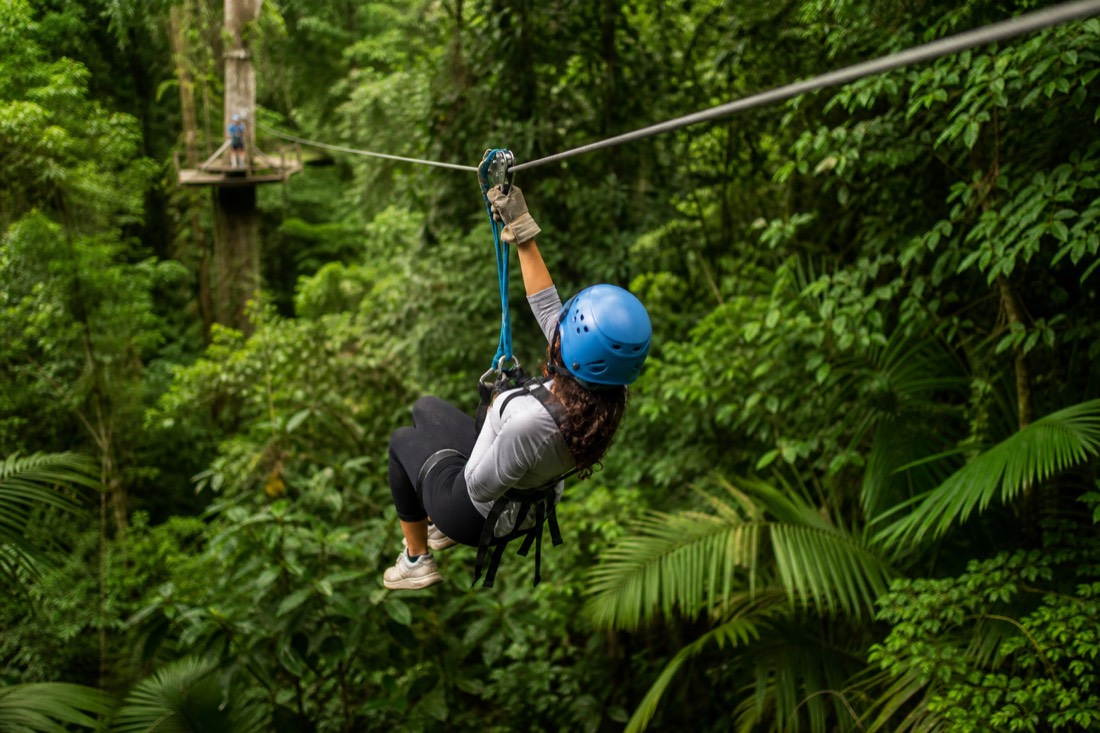
It sits inside the Wet Tropics of Queensland, the UNESCO World Heritage listing that protects this forest, and it has spent decades building a reputation as the best single place to understand the ecology rather than just walk through it. The whole design is about height and layers. You start on the floor among ferns and fungi, rise into the mid-canopy on the walkway, then climb the tower until the crowns are below you. For the current admission, hours and any seasonal notes, check the Daintree Discovery Centre's official site.
What Is The History And Mission Of The Discovery Centre?
The Discovery Centre is a privately run interpretive attraction that has operated for decades as one of the region's original places to learn the rainforest rather than just walk it. Its purpose is education and conservation: to show visitors why this forest matters, how its layers work, and what the Kuku Yalanji and later research have learned about the plants and animals here.
It sits inside a landscape managed for protection, and the science behind the signage lines up with the work of the Wet Tropics Management Authority, the body that oversees this World Heritage area. That backing is part of why the interpretation feels solid rather than sales-driven. The centre has been recognised in tourism awards over the years, and it features in Tourism Australia's guide to the Daintree as a way to understand the forest before you set foot on a wild trail.
None of that makes it a theme park. There are no animal shows and no manufactured spectacle, just the real forest presented at three heights with the context to read it. For a lot of first-time visitors, that framing is what turns a green blur into a place they can name and remember.
What Can You See And Do At The Discovery Centre?
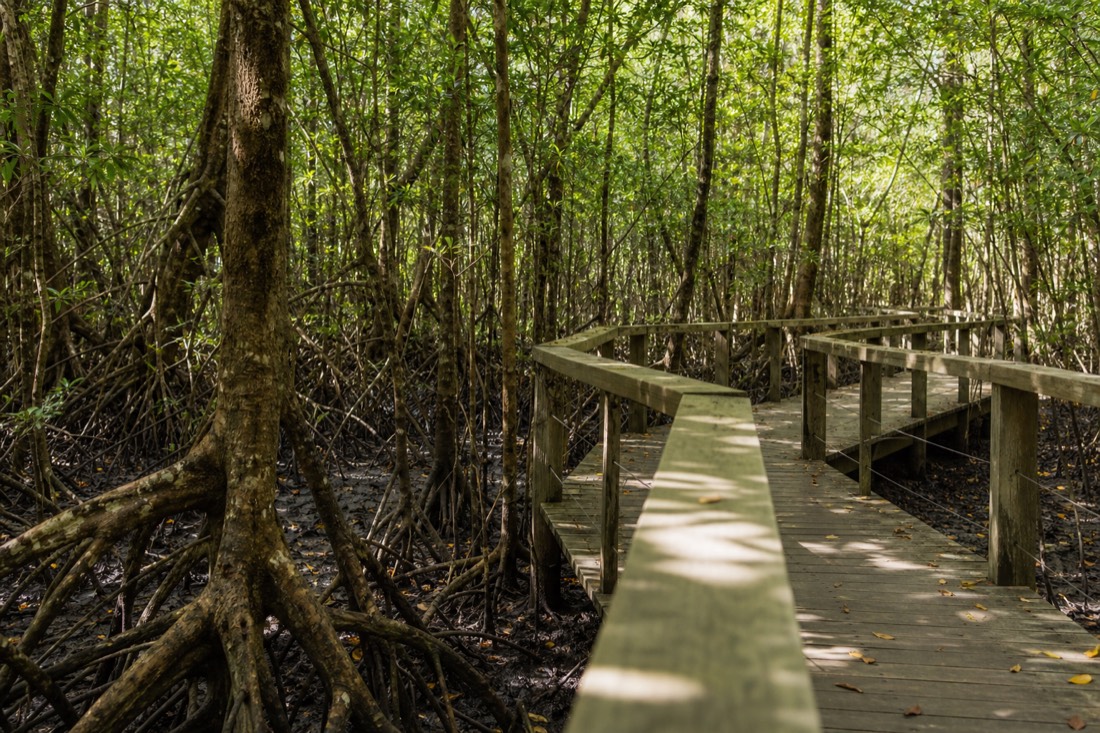
You can walk five distinct experiences on one ticket: the ground boardwalk on the forest floor, the aerial walkway through the mid-canopy, the 23-metre canopy tower, the interpretive display centre and theatre, and a self-guided audio commentary. Together they take you from leaf litter to open sky and explain what lives at each level.
The pleasure of the place is that it is self-paced. You can stand at one point for ten minutes watching a bird work the canopy, then move on when you like, with the audio guide filling in the detail a printed sign cannot. The table below lays out what each feature is and why it earns your time.
| Feature | What it is | Why go |
|---|---|---|
| Ground-level boardwalk | A low-level route across the forest floor; confirm current step-free status with the centre | Close-up ferns, fungi and cassowary habitat |
| Aerial walkway | An elevated steel walkway through the mid-canopy | Eye level with epiphytes, climbers and birds |
| Canopy tower | A tower rising about 23 metres through the layers | Climb from the floor to above the treetops |
| Display centre and theatre | Interpretive exhibits on ecology and Aboriginal use | Context before and after you walk |
| Audio guide | Self-paced commentary along the routes | Depth without joining a guided group |
Where Is The Daintree Discovery Centre And How Do You Get There?
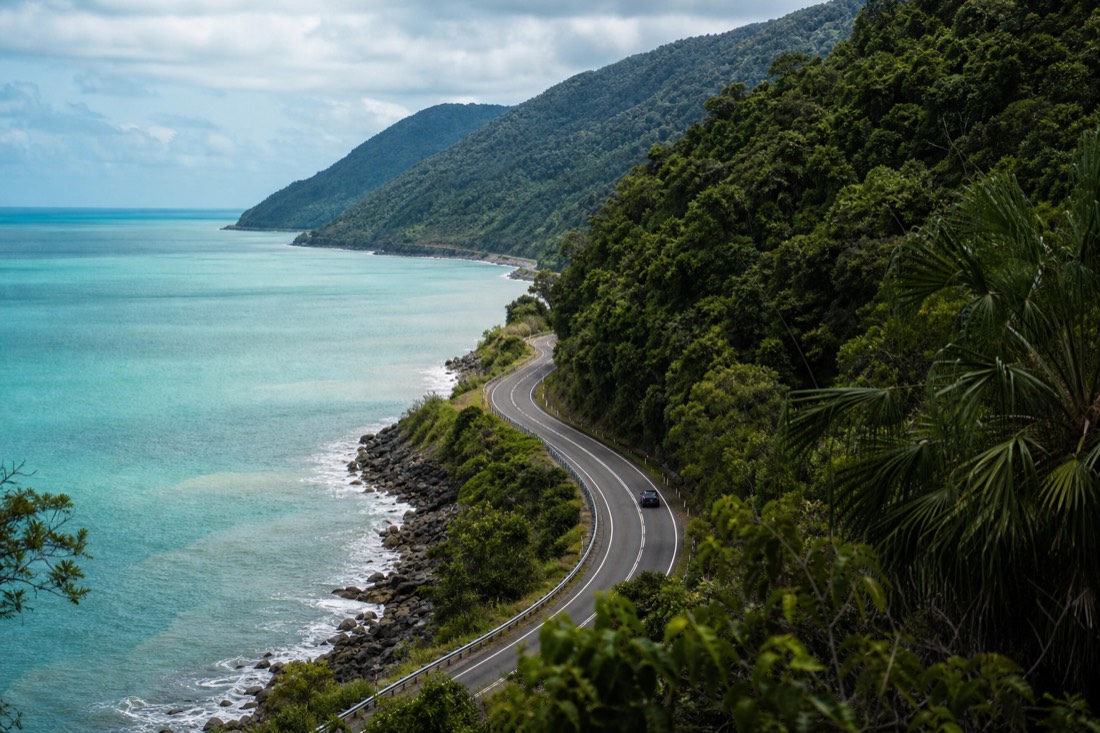
The centre is at Cow Bay, on the Cape Tribulation road north of the Daintree River. You reach it by driving to the cable ferry, crossing, and continuing north for roughly fifteen to twenty minutes. From Cairns that is about two to two and a half hours all in; from Port Douglas, closer to an hour and a half. A standard car is fine, the ferry included.
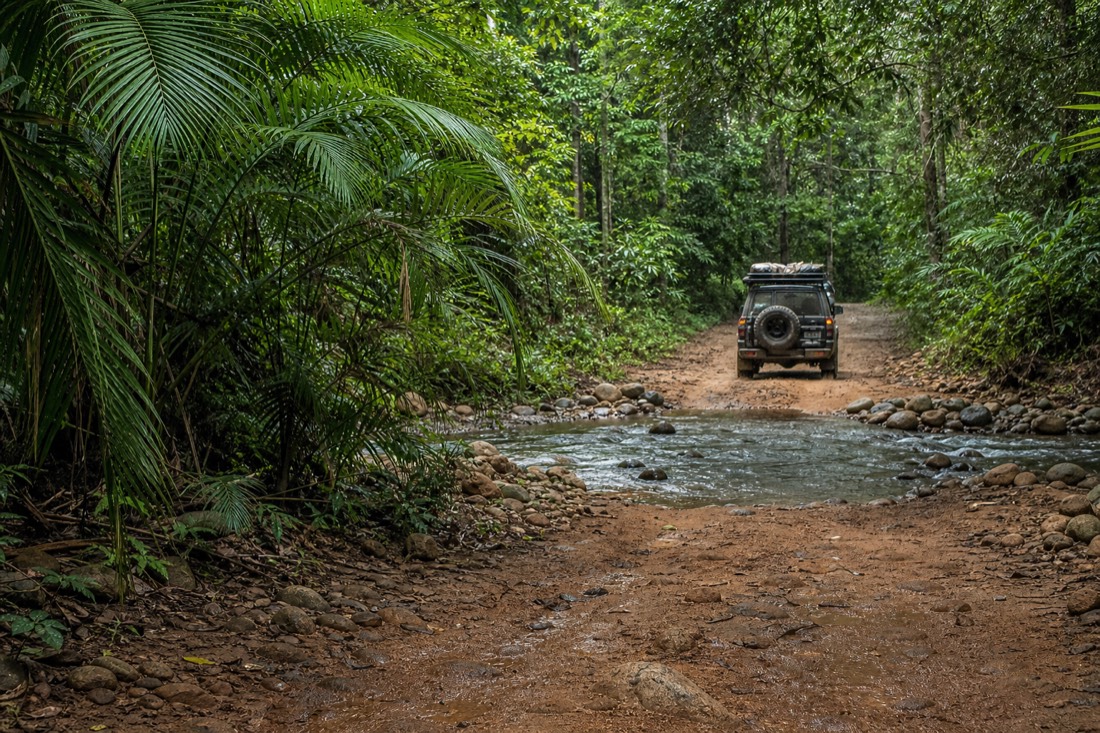
You do not need a four-wheel drive for this. The sealed road handles it, and the only obstacle is the crossing itself, which can queue on peak weekends. If you are working out the timing and the fare, our guide to the drive up and the cable ferry crossing covers how the ferry runs and how to check the current rate. The table gives rough driving times from each base.
| From | Approx. driving time | Ferry |
|---|---|---|
| Cairns | 2 to 2.5 hours | Yes, cable ferry en route |
| Port Douglas | About 1.5 hours | Yes, cable ferry en route |
| Daintree River ferry | 15 to 20 min to Cow Bay | You have just crossed |
| Cape Tribulation | About 30 to 40 min south | No, both north of the ferry |
Build the ferry into your timing rather than fighting it. The cable ferry runs on a regular cycle, but it can bank up on peak weekends and in school holidays, so an extra fifteen or twenty minutes in the plan saves the stress. Parking at the centre is straightforward, and the road in from the crossing is sealed and gentle. If the ferry ever stops for maintenance or high water, that news travels fast locally, so a quick check the night before is wise in the wet season.
How Much Do Tickets Cost And How Long Should You Allow?
Ticket prices change, so we do not quote a figure: check the current admission on the official site before you drive up. Allow between an hour and a half and two hours to do the boardwalk, walkway, tower and displays without rushing. English audio and written interpretation are available. The ground boardwalk is the low-level route for visitors avoiding elevated features, but confirm its current step-free status and access to individual elevated features with the centre.
Two hours is the honest sweet spot. Rush it in forty minutes and you have paid to jog past the thing you came to understand. Some visitors ask whether a ticket allows a return the same or next day, which is worth confirming when you buy, since the light and the birdlife differ between a fresh morning and a warm afternoon.
| Question | Guidance |
|---|---|
| Ticket price | Check the current admission on the official site |
| Time to allow | 1.5 to 2 hours for a proper visit |
| Re-entry | Ask whether your ticket covers a return visit |
| Audio guide | Accompanies the walks; confirm it is included |
| Accessibility | The ground boardwalk is the low-level route; confirm current step-free status and access to individual elevated features |
Do Daintree Tours Include The Discovery Centre?
No. The guided day trips grouped under Daintree Rainforest Tours are built around the river, the gorge and the coast, and none of them stops at the centre. To visit it you self-drive to Cow Bay, or add it yourself on a day when you are already exploring the Cape Tribulation area under your own steam rather than on a fixed coach schedule.
This is a deliberate honesty, not an oversight. Day tours run tight loops that prioritise the river cruise, Mossman Gorge and the beaches, and a proper Discovery Centre visit needs a self-directed hour or two the schedule does not hold. If you are self-driving and want the area around it too, our rundown of a day exploring Cape Tribulation and the broader list of things to do across the region will help you build the day.
If you would rather be driven and let a guide handle the ferry and the timing, a full-day Cape Tribulation tour or a 4WD adventure up from Cairns puts you in the same stretch of forest, even though the centre itself is a stop you would make separately.
How Does The Discovery Centre Fit A Self-drive Daintree Day?
It slots in beautifully as the first proper stop north of the ferry. A self-drive day from Port Douglas can cross the river mid-morning, spend two hours at the centre while the light is good, then push north to a Cape Tribulation beach, a boardwalk and the tropical-fruit ice cream before turning for home. That order keeps the centre uncrowded and the afternoon loose.
The trick is to do the centre early. Arrive when it opens and you get the canopy at its most active, then the rest of the day is yours to wander. Because you are driving, nothing is rationed: linger at Alexandra Lookout, add another signed walking stop, or double back if the tower tempts you a second time. Do not use cold, clear, fresh or upstream-looking water as evidence that swimming is safe; crocodiles may occur in freshwater, and local signs, closures and current official advice must be followed. The sample below assumes a Port Douglas base, which trims roughly forty-five minutes each way against Cairns.
| Time | Stop | What you are doing |
|---|---|---|
| 8:00 | Leave Port Douglas | Drive north up the coast road |
| 9:15 | Daintree River ferry | Cross to the Cow Bay side |
| 9:35 | Discovery Centre, Cow Bay | Boardwalk, aerial walkway, canopy tower |
| 11:45 | Cape Tribulation | Beach and the Dubuji Boardwalk |
| 13:30 | Daintree Ice Cream | Tropical-fruit ice cream |
| 14:15 | Alexandra Lookout | The view, then start back south |
| 16:00 | Port Douglas | Return |
Is The Daintree Discovery Centre Worth It?
For first-time visitors, families and anyone caught by rain, yes. The centre turns a wall of green into something you can read: it names the layers, explains the cassowary's role and shows how a strangler fig kills its host. The canopy tower alone, lifting you above the treetops, is a view you get nowhere else in the forest.
Seasoned rainforest walkers who prefer a living guide and the chance of wildlife may find a guided walk more rewarding. But even they tend to admit the tower is special, and on a wet afternoon when the trails turn to mud, the covered displays and audio guide are the smartest ticket in the region. Families with restless kids do especially well here, because the height and the theatre hold attention that a two-hour bush walk can lose.
Value is the other half of the question. Against the cost of getting all the way up here, a couple of hours that finally make the forest make sense is money well spent for most people, and it lifts every other stop on the drive. Once you know what a strangler fig is doing, or why the cassowary matters, the beaches and boardwalks north of Cow Bay read differently. The centre is less a headline attraction and more the key that unlocks the rest.
If you are travelling with children, our notes on visiting the Daintree with kids pair well with a centre visit. It can introduce visitors of varied ages to the forest, but access to every elevated feature is not confirmed and current operating conditions should be checked before visiting.
What Will You See From The Canopy Tower And Aerial Walkway?
The whole point is vertical. On the forest floor you meet ferns, fungi and the leaf litter a cassowary works through. The aerial walkway lifts you into the mid-canopy among epiphytes and climbing plants. The 23-metre tower carries you to the emergent crowns and open sky, where the light and the birdlife are completely different from the gloom below.
Each layer is its own habitat. Down low it is damp, dim and slow. Halfway up, the walkway puts you level with basket ferns wedged in the forks of trees and birds that rarely come to ground. At the top, you look across a canopy that behaves like a second forest floor, sun-struck and busy. The table maps what lives where and which structure gets you there.
The climb itself is part of the reward. You feel the air change as you rise, cooler and busier with sound, and the forest that looked like a solid wall from the road resolves into distinct storeys with their own light and their own life. People who have walked a dozen rainforest trails still tend to go quiet at the top of the tower, because seeing a canopy from above is rare anywhere, and here it comes with the Coral Sea somewhere off through the leaves.
| Forest level | What lives there | See it from |
|---|---|---|
| Forest floor | Ferns, fungi, leaf litter, cassowary habitat | Ground-level boardwalk |
| Understorey | Saplings, palms, young epiphytes | Aerial walkway |
| Mid-canopy | Birds, climbing plants, filtered light | Aerial walkway |
| Upper canopy | Emergent crowns and open sky | The 23-metre canopy tower |
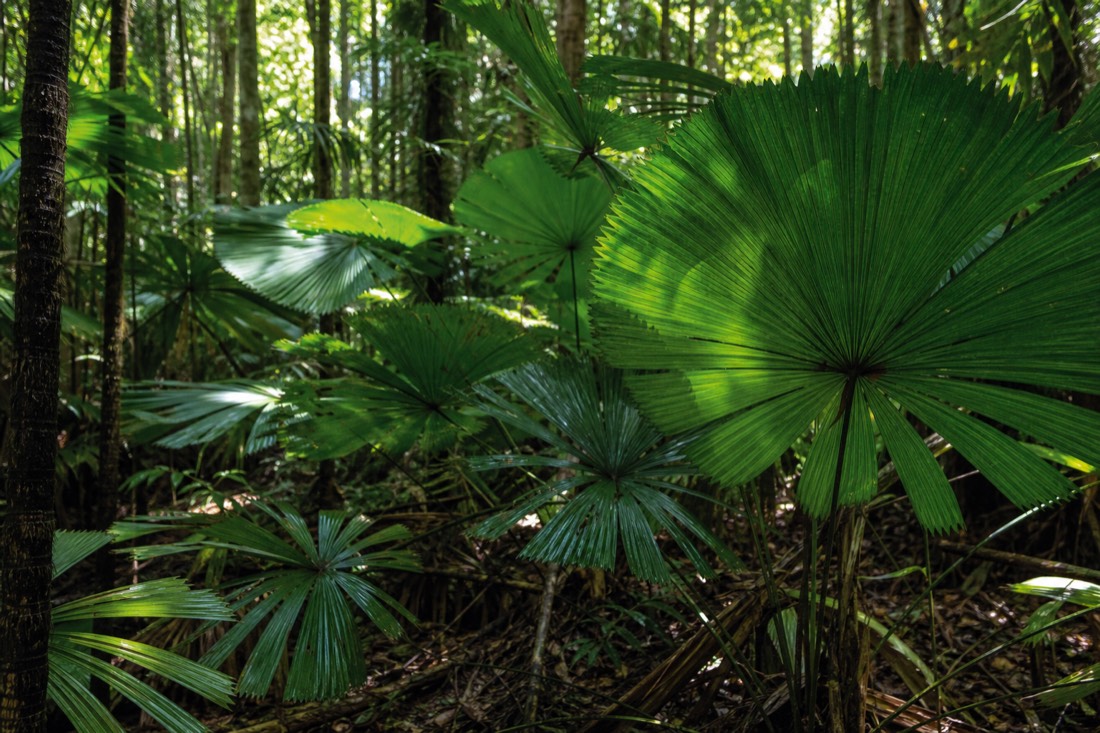
For the plants you will see named along the routes, from fan palms to strangler figs, our guide to the ancient plants of the Daintree goes species by species.
What Wildlife Might You See At The Discovery Centre?
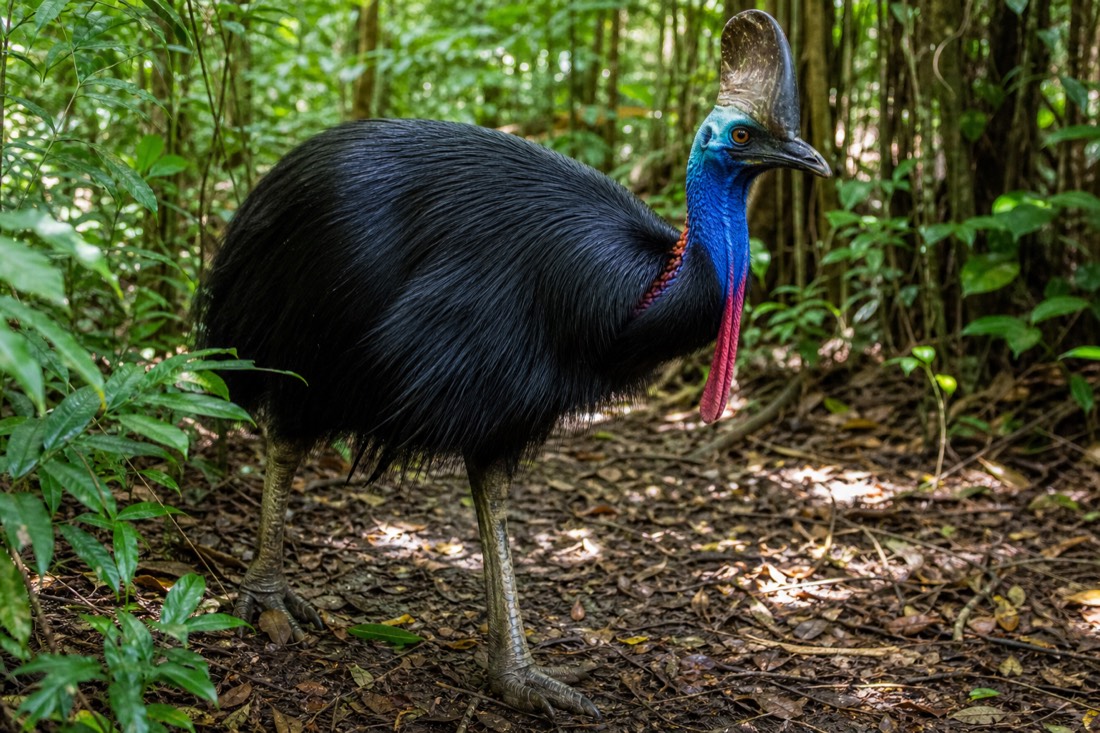
Wildlife here is real and unforced, which means it is never guaranteed. Your best odds are birds in the canopy, a Boyd's forest dragon clinging to a trunk, and butterflies through the sunlit gaps. Southern cassowaries move through the wider Cow Bay area and are most often seen on quiet roads at dawn rather than inside the centre itself.
The height helps you here. Standing on the walkway or the tower puts you level with birds that rarely come down, so a slow half hour up top can turn up kingfishers, honeyeaters and the flash of a big blue butterfly working the clearings. On the floor, the dragons sit so still on trunks that most people walk past them until a guide or a sharp-eyed child spots one. Frogs come out after rain, and on a wet-season evening the calls carry.
Keep your expectations honest and your eyes up. This is not a place with fed animals or set sightings, and that is the point of it. For realistic odds on every species across the region, and the times of day that swing them, read our guide to the wildlife of the Daintree.
| Animal | Odds at the centre | Best time |
|---|---|---|
| Southern cassowary | Rare inside; better on nearby roads | Dawn |
| Kingfishers and honeyeaters | Good in the canopy | Morning |
| Boyd's forest dragon | Common on tree trunks | Any daylight |
| Butterflies | Common in sunlit clearings | Warm days |
| Frogs | Active near water | After rain, evening |
| Tree kangaroo | Rare and special | Early or late |
When Is The Best Time To Visit The Centre?
Mornings are best for birds and gentler heat, and the centre is worth a visit in any season because so much of it is covered. The dry months from May to October make the walking and the drive easier, with August the driest. The green season from November to April is lusher and quieter, though humid and prone to heavy afternoon showers.
Covered displays can make a rainy visit easier to manage than an exposed bush walk, but check current operating and weather conditions before using elevated features. Arrive early if a bird list matters to you, since the canopy quietens through the heat of the day. For a fuller month-by-month picture across the region, see the best months to visit the Daintree.
| Season | At the centre | Note |
|---|---|---|
| Dry (May to Oct) | Easier walking and driving, clearer light | Busier; August is the driest month |
| Green (Nov to Apr) | Lush, dramatic, fewer visitors | Humid with heavy showers, but mostly under cover |
What Should You Bring And Know Before You Go?
Bring insect repellent, water, closed shoes and a light rain jacket, and set aside a genuine two hours. Mosquitoes and sandflies work the shaded floor, boardwalks turn slippery after rain, and short showers arrive even in the dry. Binoculars pay off in the canopy, where the best birds sit high and still.
The ground boardwalk provides a low-level route, while the aerial walkway and 23-metre tower are elevated features whose individual access arrangements are not specifically confirmed. Check the route that suits your party before visiting. The checklist below covers the essentials for a self-drive stop.
One more thing worth knowing: fuel and food thin out fast north of the ferry. Fill the tank before you cross, carry more water than you think you need, and do not count on phone signal being reliable in the forest. None of this is a reason to worry, but the far side of the river is genuine bush, and a little self-sufficiency turns a good day into an easy one.
| Bring | Why |
|---|---|
| Insect repellent | Mosquitoes and sandflies, especially in shade |
| Water | Warm and humid even in the dry season |
| Closed walking shoes | Boardwalks can be slippery after rain |
| Light rain jacket | Short showers arrive year-round |
| Binoculars or a zoom lens | Canopy birds sit high and still |
| A spare 1.5 to 2 hours | The walkway, tower and displays reward slow time |
How Does The Centre Compare To A Guided Rainforest Walk?
The centre is a self-paced overview that reaches from floor to canopy; a guided walk is a slower, wilder read of the forest with a person answering questions and helping interpret what is encountered. Neither replaces the other, and wildlife sightings are not guaranteed. The centre teaches you the layers, then a guided walk brings them to life on the ground.
If your time is short and the sky is grey, the centre wins on value and reach. If you want a guide reading tracks, pointing out a Boyd's forest dragon on a trunk and explaining the Kuku Yalanji use of a plant, a walk is the richer hour. Many people do both across a couple of days and find they complement each other neatly. Our guide to guided rainforest walks and boardwalks covers the walk side, including which trails suit which fitness.
| Aspect | Discovery Centre | Guided walk |
|---|---|---|
| Pace | Self-paced with an audio guide | Set by the group and guide |
| Best for | Overview, families, rainy days | Wildlife, culture, live questions |
| Reaches | Floor to above the canopy via the tower | Forest floor and boardwalks |
| Interpretation | Displays and recorded audio | A person reading the forest live |
| Getting there | Self-drive to Cow Bay | Often included in a tour |