Best Daintree Rainforest Walks And Boardwalks
The Daintree rewards people who get out of the car. Most of its best walks are short, flat boardwalks that put you deep in the forest with dry feet, but there is a hard ridge climb too. Here is what each walk is like, how to behave on it, and who should skip which.
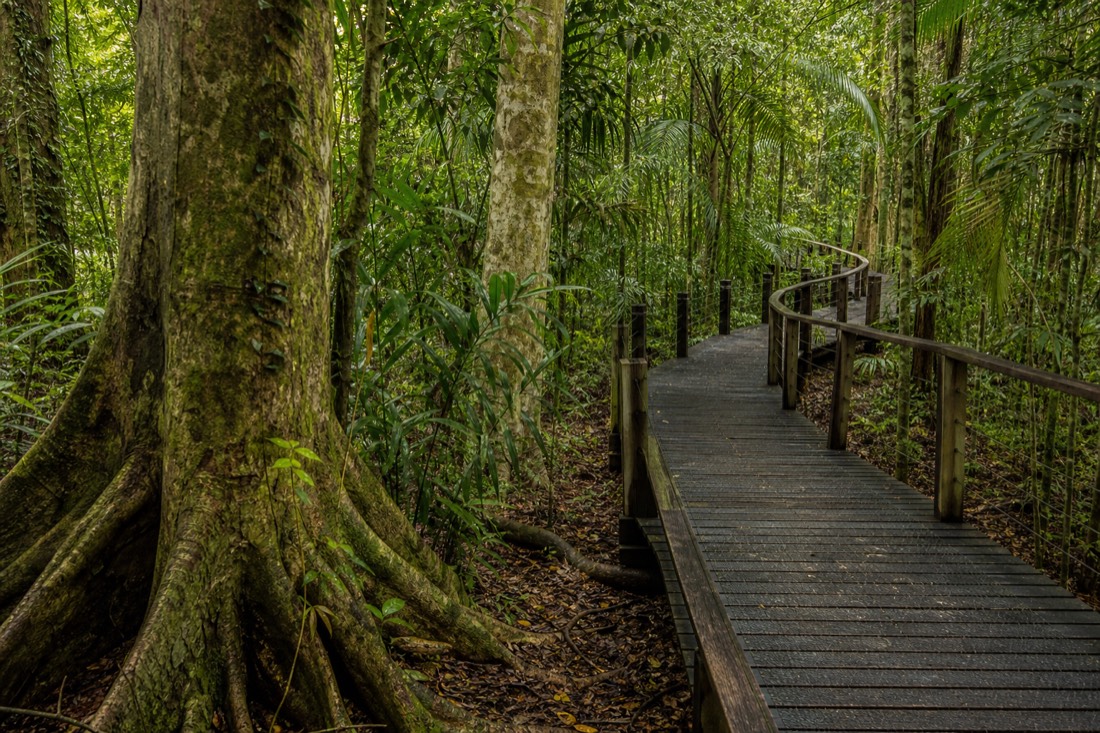
You can see the Daintree from a car window and come away thinking it is just green. Get out and walk a boardwalk for twenty minutes and it turns into something else: the smell of leaf litter, the racket of insects, a strangler fig strangling, a Boyd's forest dragon frozen on a trunk at eye level. The forest only really opens up on foot, and the good news is that most of the best walking asks very little of you.
Booking Choice: Start with the Daintree and Cape Tribulation day tour for guided rainforest boardwalk and beach walking, with transport available from Cairns, Northern Beaches and Port Douglas.
Check Dates For The Daintree And Cape Tribulation Day TourNearly all of the classic walks are short, flat, elevated boardwalks built to keep your feet dry and the forest floor intact. A couple are longer circuits, and exactly one, the Mount Sorrow ridge, is a hard full-day climb for fit and prepared walkers only. The trips grouped under Daintree Rainforest Tours use these same tracks, usually with a guide reading the forest as you go. This guide runs through each walk, the etiquette that keeps you and the wildlife safe, and how accessible each one really is. Most people will happily fill a day or two with the short walks alone, and never need to lace up for anything hard.
At a glance: Daintree walks ranked by difficulty
A rough ranking, not an official grade. Read the trailhead sign for current lengths and closures.
What Are The Best Walks And Boardwalks In The Daintree?
The pick of them are the Mossman Gorge circuit in the south, the Marrdja and Dubuji boardwalks near Cape Tribulation, the Jindalba boardwalk near Cow Bay, and the short Kulki walk to the Cape Tribulation lookout. All are easy to moderate. The one hard walk is the Mount Sorrow Ridge Trail, a full-day climb.
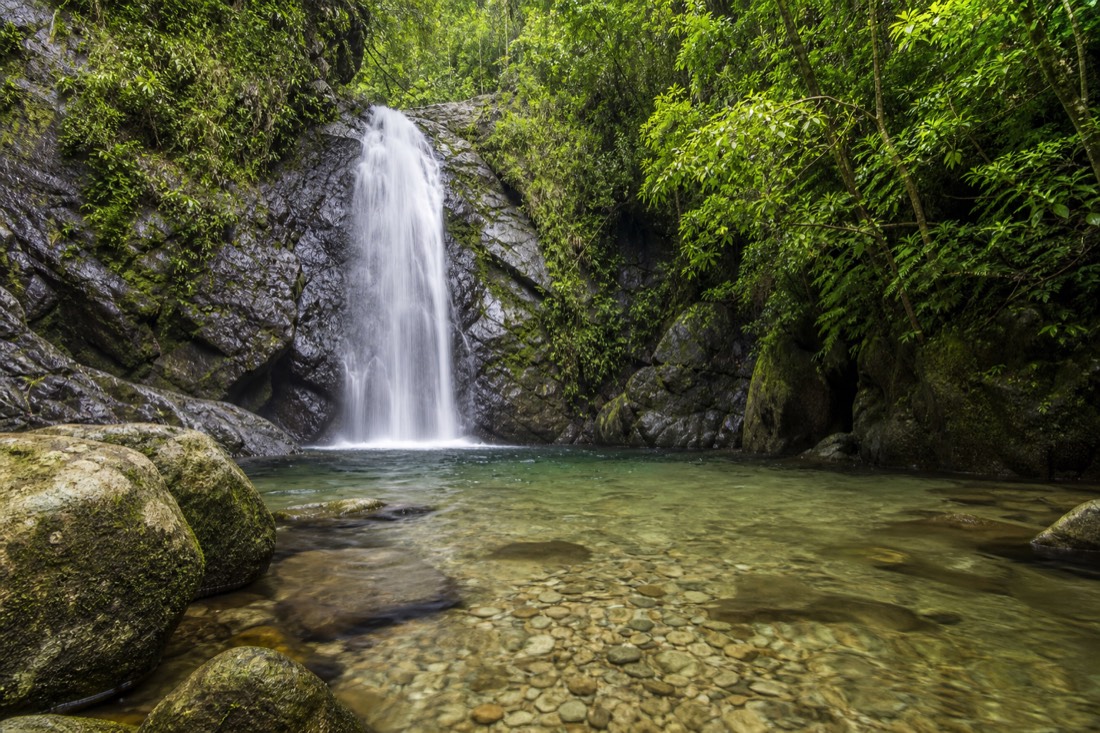
Think of the walks in two groups. The short boardwalks and loops, most under an hour, are where almost everyone should spend their time, because they deliver the forest with minimal effort and minimal impact. Then there is Mount Sorrow, a different animal entirely, steep and long and not to be taken lightly. The table below lines them up so you can match a walk to your day and your legs. All of it sits inside the Wet Tropics of Queensland World Heritage rainforest, and there is far more to a Daintree trip than walking, so it is worth reading alongside the other things to do in the Daintree.
| Walk | Area | Approx time | Difficulty | What you see |
|---|---|---|---|---|
| Kulki boardwalk | Cape Tribulation | about 15 min | Easy, short | Lookout where rainforest meets the beach |
| Dubuji Boardwalk | Myall Beach, Cape Trib | about 40 min | Easy, flat loop | Coastal rainforest, fan palms, swampy forest |
| Marrdja Botanical Walk | Oliver Creek | roughly 45 min | Easy, flat | Rainforest giving way to mangroves and a creek |
| Jindalba Boardwalk | Cow Bay | short loop, longer option | Easy to moderate | Lowland rainforest near the Discovery Centre |
| Mossman Gorge Circuit | Mossman, southern Daintree | about 1 hour | Moderate, steps and roots | River, suspension bridge, buttress roots, figs |
| Mount Sorrow Ridge Trail | Cape Tribulation | 6 to 7 hours return | Hard, steep | Ridge forest and a high coastal lookout |
Times and lengths are approximate and do change. Read the trailhead sign for the current numbers and any closures when you arrive, especially after rain.
A sensible way to plan is to pick one short boardwalk in the north, one in the south, and only add a hard walk if you specifically want the challenge. That covers the full range of what the forest looks like, from lowland rainforest to mangrove to coast, without turning a holiday into a march. The easy walks sit close enough together in each area that you can string two or three into a relaxed half day. If you only have a couple of hours, one boardwalk plus a lookout is plenty to feel like you have been inside the Daintree properly.
What Is The Mossman Gorge Circuit Walk Like?
It is a moderate loop of about 2.4 kilometres through dense lowland rainforest, crossing the Mossman River on a suspension bridge, with steps and exposed roots underfoot. Allow around an hour. It starts from the shuttle stop beyond the river-viewing area and is the best forest walk in the southern Daintree.
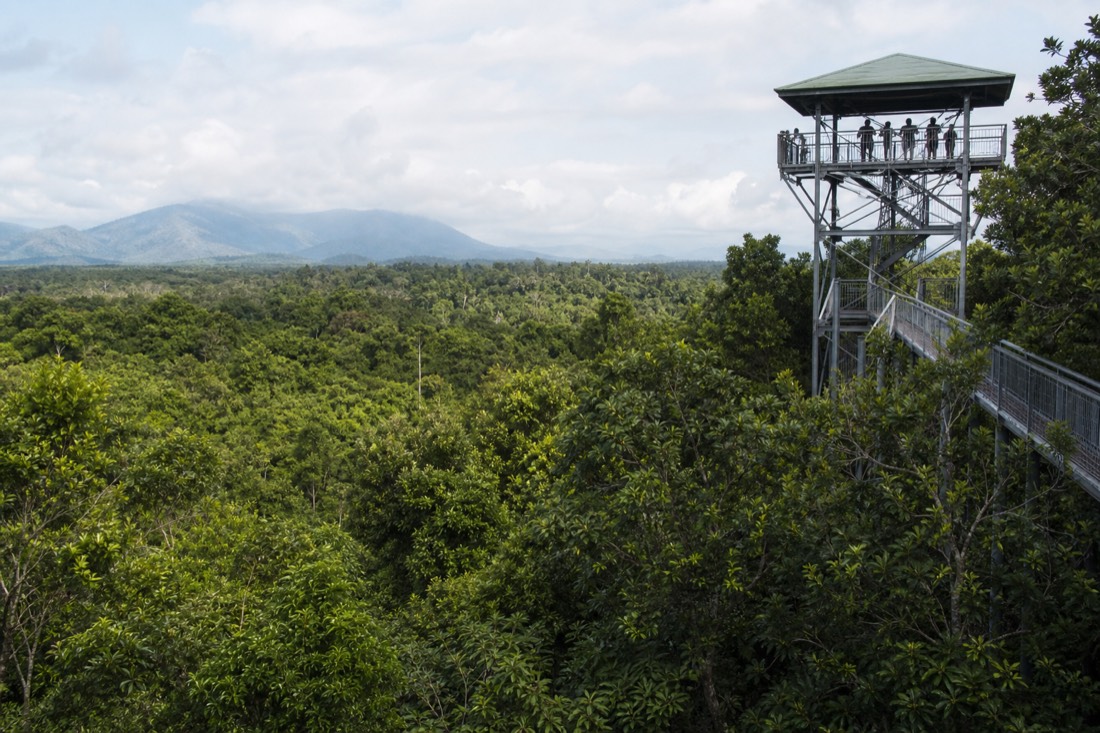
The circuit begins where the easy boardwalk ends, past the river-viewing area and over the Rex Creek suspension bridge. From there it loops through proper rainforest: buttress roots taller than a person, strangler figs that have outlived their hosts, fan palms overhead. It is not a hard walk, but the surface is natural and gets slippery when wet, so wear grip and slow down on the descents. Do not plan to swim at Mossman Gorge: Queensland Parks and Wildlife Service does not recommend swimming because currents and submerged hazards are unpredictable. Clear or fresh-looking water does not establish that it is safe. For everything else about the site, from the shuttle to the cultural walk, see the full Mossman Gorge guide.
What Is The Marrdja Botanical Walk?
Marrdja is a short, flat boardwalk at Oliver Creek, between Cow Bay and Cape Tribulation, that carries you from rainforest into mangroves and out to a viewing platform over the creek. It is one of the best places to actually see the join between two habitats. Plan on roughly forty-five minutes at an easy pace.
No supplied bookable itinerary explicitly confirms Marrdja Botanical Walk. Plan this named boardwalk independently unless a provider verifies it for the selected departure.
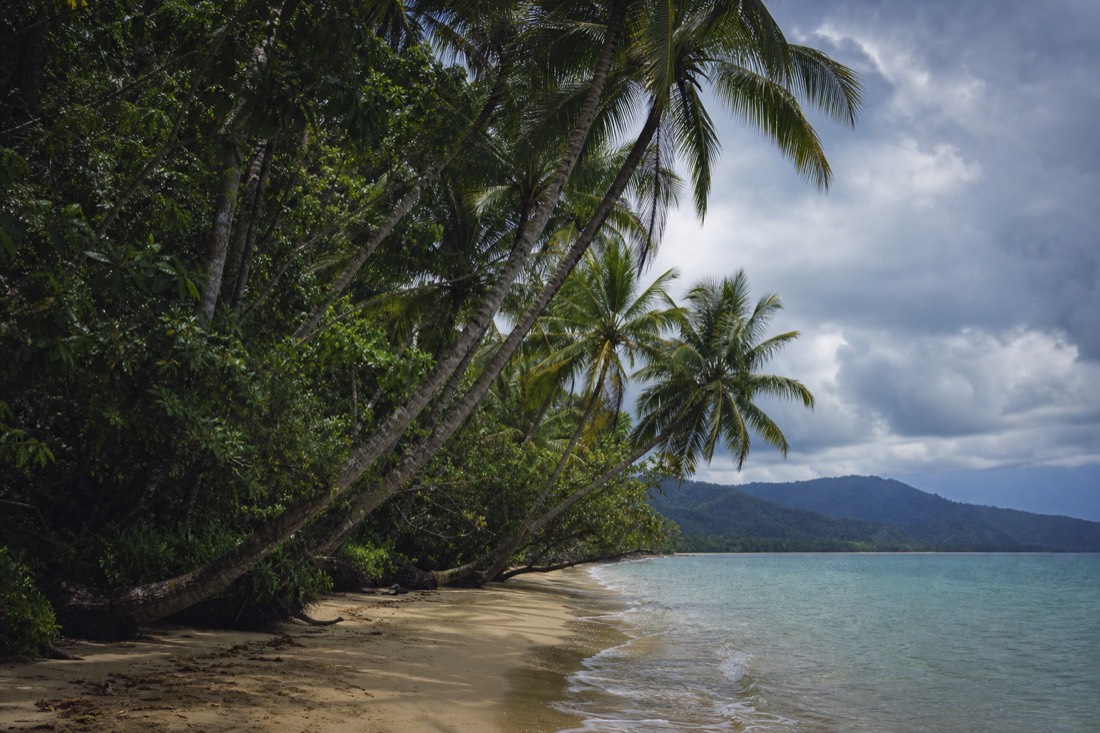
What makes Marrdja special is the transition. You start under tall rainforest, and as the ground gets wetter the forest hands over to mangroves, their roots arching out of the mud, before the boardwalk delivers you to the creek. It is a quiet, shaded, genuinely interesting walk, and the interpretive signs help you make sense of what you are looking at. Because it is flat and boardwalked for most of its length, it suits families and slower walkers, though the far end can flood on a big tide or after heavy rain. Duration varies with how long you linger, so check the trailhead sign for the current loop length. It pairs naturally with the coastal walks a little further north on any run up to Cape Tribulation.
What Is The Dubuji Boardwalk?
Dubuji is an easy forty-minute boardwalk circuit through coastal rainforest and swampy forest at Myall Beach, near Cape Tribulation. It is flat, well maintained and shaded, threading between fan palms and paperbarks, and it is widely rated one of the best short walks in the whole Daintree.
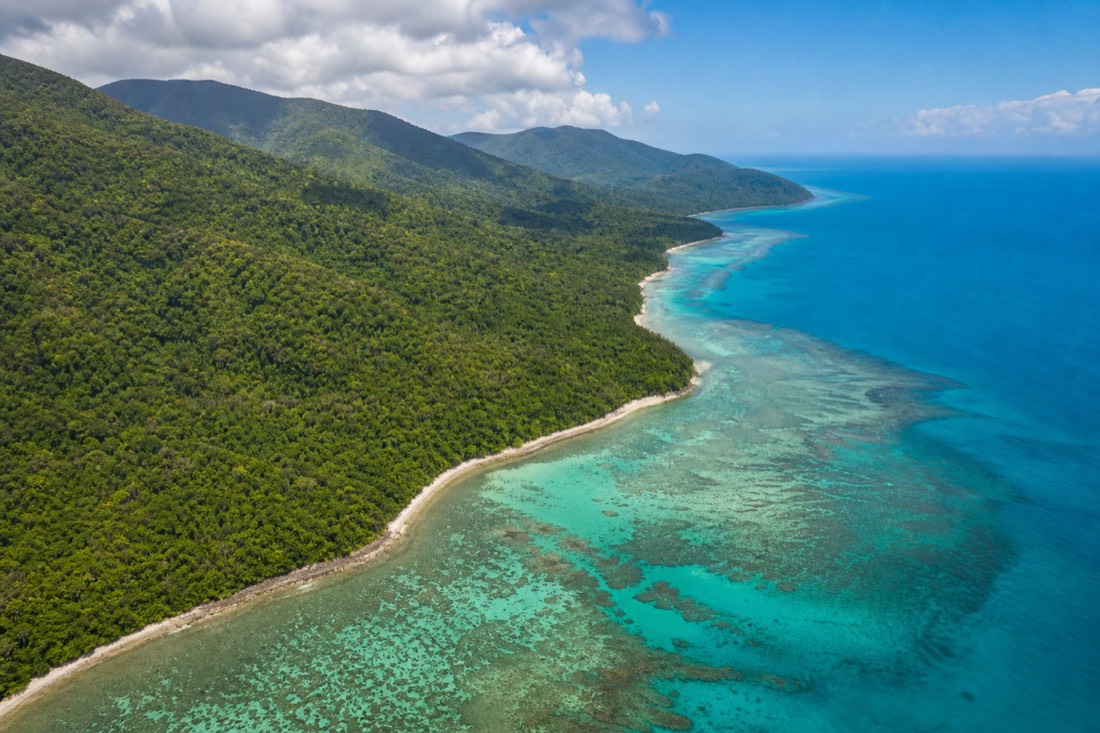
If you only do one boardwalk in the north, this is a strong candidate. The circuit stays flat and dry over the boardwalk while the forest around it is anything but, all standing water, palms and filtered light, and it ends near the beach. Visitors consistently rate it among the best short walks in the region, and it asks almost nothing of you physically, which makes it a rare walk that suits both a keen photographer and a tired toddler. It sits close to the beaches and lookouts covered in the Cape Tribulation guide, so it slots easily into a morning up there.
What Is The Jindalba Boardwalk?
Jindalba is a short boardwalk loop near Cow Bay, close to the Daintree Discovery Centre, with a longer and rougher circuit option for those who want more. The short loop is the easier option, but access needs and current conditions should still be checked; the longer circuit is unsealed, hillier and better for confident walkers. Check the trailhead sign for current distances.
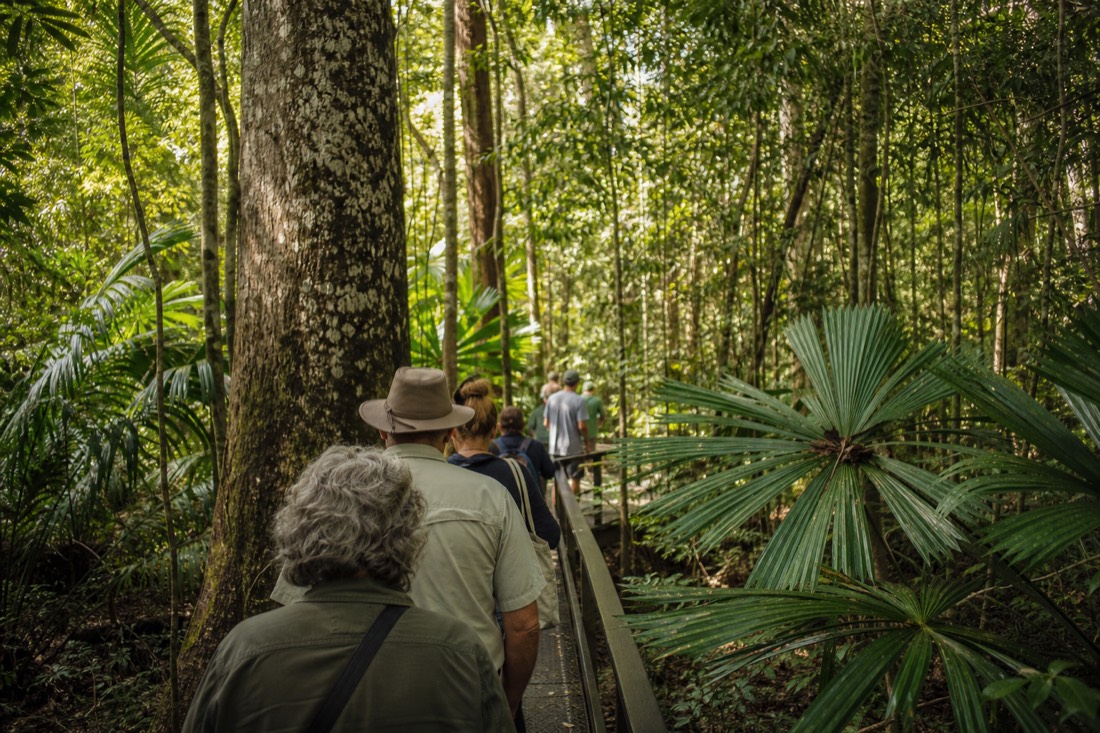
Jindalba gives you a choice. The boardwalk loop is short, flat and family friendly, a gentle sample of lowland rainforest. Branch onto the longer circuit and the surface changes to natural track with some climbing, so treat that as a proper walk with shoes to match. The area is right by the aerial walkway at the Discovery Centre, so it is easy to combine the two into a self-drive rainforest morning around Cow Bay.
What Are The Cow Bay And Kulki Walks?
Kulki is a very short boardwalk to the Cape Tribulation lookout, where you stand above the point that rainforest runs straight into the Coral Sea. Cow Bay is a short walk from its car park to a quiet, clear beach. Both are easy, brief and high on reward for the effort.
Kulki is the money shot of the northern Daintree: a few minutes on a boardwalk and you are looking down on the exact place where two World Heritage areas meet at the shoreline, the forest and the reef in one frame. Cow Bay Beach, a little south, is a short stroll to a long, quiet stretch of sand. Neither is a workout, and both are worth stopping for. A reminder that applies to every beach up here: the walking is the safe part, the swimming is not, so use our guide to where you can safely swim.
Is The Mount Sorrow Ridge Trail Worth It?
Only if you are fit, prepared and starting at first light. Mount Sorrow is a hard climb near Cape Tribulation, roughly six to seven hours return, steep and unrelenting, with a coastal lookout as the reward. It is for experienced walkers with plenty of water, not a casual afternoon stroll, and conditions can close it.
No active affiliate product was verified for a guided Mount Sorrow ascent. It is a demanding 7 km return Grade 4 hike, with QPWS advising about six hours; plan the named trail independently and check current park conditions.
This is the one walk in this guide that can get people into trouble. The ridge climbs hard from near sea level, the humidity is punishing, and there is no easy bail-out once you commit. People underestimate it every year, lulled by how gentle the boardwalks were the day before, and the two are simply not the same kind of walk. Fitness matters here, but so does honest judgement about the weather and the time of day. If you are going to do it, start at dawn, carry far more water than feels necessary, tell someone your plan, turn back if you are slow or the weather turns, and register the time cut-offs on the sign. Check current track conditions with the Wet Tropics Management Authority before you set out, because ridge tracks close after heavy rain. For most visitors, the short boardwalks give ninety percent of the forest for five percent of the effort, and that is not a criticism of Mount Sorrow so much as honest advice.
For the small number who are properly prepared, the payoff is real: a high lookout over the coast and the reef, and a sense of the forest's scale you simply do not get from a boardwalk. If that is you, start early, move carefully, and treat the mountain with the respect it asks for.
Should You Do These Walks Self-guided Or With A Guide?
The boardwalks are easy to self-guide, well signposted and hard to get lost on, so an independent visit works fine. A guide adds the layer you cannot see for yourself: the plants, the wildlife and the cultural reading of the forest. On the short walks the choice is yours; on anything hard, going with people who know the track is the safer call.
For Dubuji, Marrdja, Kulki and the Mossman boardwalk, self-guiding is genuinely easy and the interpretive signs help. What you trade away is the spotting, since a good guide finds the forest dragon, the fig wasp story and the medicinal plant you would walk straight past. On a guided small-group walk from Port Douglas the numbers stay low and the pace stays slow, and a full-day Cape Tribulation tour strings several of these walks together with the driving and ferry handled. If you are torn, our honest look at walking the Daintree without a guide weighs both sides. Whatever you choose, the plants alone reward slowing down, and the fan palms and strangler figs deserve a second look.
| Self-guided | With a guide | |
|---|---|---|
| Best for | The short, signed boardwalks | Wildlife, plants and cultural depth |
| Cost | Lowest | Higher, with transfers and fees included |
| What you spot | What catches your eye | Far more, read for you |
| Hard walks | Only if experienced and prepared | Safer, local knowledge of the track |
There is a middle path too. Plenty of visitors self-guide the easy boardwalks and save a guide for one focused outing, whether that is a wildlife-led walk or a cultural walk in the south. You get the freedom to wander on your own terms and the depth of an expert on the day it matters most. However you split it, the forest rewards curiosity more than fitness, so the best walkers here are often the slowest ones.
What Will You See On The Daintree Walks?
Depending on the walk, you move through four broad habitats: lowland rainforest with buttress roots and strangler figs, palm and swamp forest, mangrove and creek edges, and the coastal fringe where forest meets sand. Each has its own plants and wildlife, from fan palms and forest dragons to mangrove crabs and, on a lucky day, a cassowary.
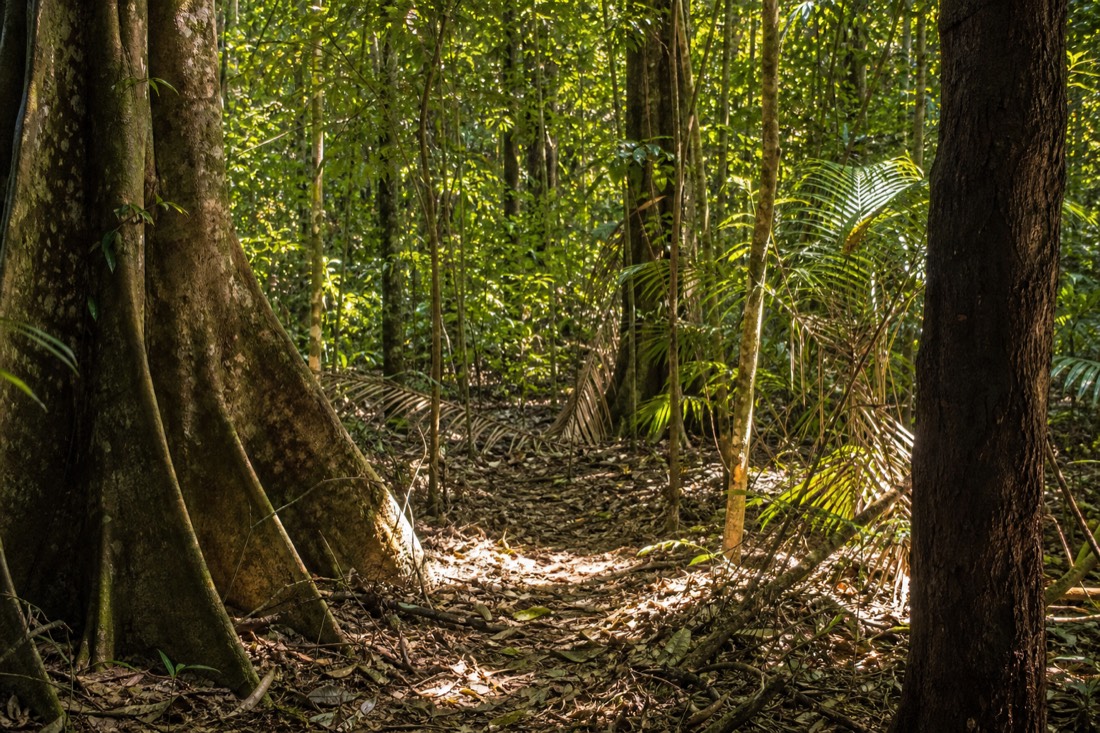
The rainforest floor is the classic scene: huge buttressed trunks, strangler figs slowly killing their hosts, ferns and fungi, and Boyd's forest dragons frozen on trunks at eye level. Wetter ground brings fan palms with fronds you could shelter under, and paperbark and swamp forest where the boardwalks earn their keep. At Marrdja the rainforest hands over to mangroves, a different world of arching roots, mud lobsters and wading birds. Up on the coastal walks the forest thins to the beach and you get the reef-meets-rainforest view that makes the northern Daintree famous.
Wildlife is never guaranteed on any walk, and that is worth saying plainly, since this is ancient forest rather than an open savanna full of big animals. What early starts and small, quiet groups buy you is better odds: birds calling before the heat sets in, a dragon that has not yet been spooked, the occasional cassowary crossing a track at first light. Slow down, look up as well as down, and let a guide point out what an untrained eye slides straight past.
| Habitat | Where | What to look for |
|---|---|---|
| Lowland rainforest | Mossman, Jindalba | Buttress roots, strangler figs, forest dragons |
| Palm and swamp forest | Dubuji | Fan palms, paperbarks, filtered light |
| Mangrove and creek | Marrdja | Arching roots, crabs, wading birds |
| Coastal fringe | Kulki, Cow Bay | Forest meeting the beach, reef views |
What Should You Take On A Rainforest Walk?
For the short boardwalks you need very little: closed shoes with grip, insect repellent, water, sun protection and a light rain jacket in the wet season. For the Mount Sorrow climb, scale all of that up, carry far more water than feels necessary, and add proper food and a charged phone.
The short walks are forgiving, but the two things people most often regret leaving behind are repellent and decent shoes, because the sandflies find bare ankles and the wet granite finds smooth soles. Water matters even on a short loop, since the humidity dehydrates you faster than the distance suggests. If you are only doing boardwalks, a small daypack covers it, and you can refill a bottle before you set out.
Mount Sorrow is the exception that earns real respect. Treat it like a serious day hike rather than a stroll: sturdy, broken-in shoes, more water than seems sensible, food, sun protection, a rain jacket whatever the season, and a way to signal for help. Do not start it late, and turn back rather than push on if you are slow or the weather closes in.
| Item | Short boardwalks | Mount Sorrow |
|---|---|---|
| Closed shoes with grip | Yes | Sturdy, broken-in |
| Water | A bottle | Plenty, more than you think |
| Insect repellent | Yes | Yes |
| Sun protection | Hat and sunscreen | Hat and sunscreen |
| Rain jacket | Wet season | Always |
| Food and a charged phone | Optional | Essential |
What Are The Rules Of Boardwalk Etiquette And Cassowary Awareness?
Stay on the boardwalk, take everything out with you, and never feed wildlife. If you meet a cassowary, do not approach it, do not run, and do not feed it: back away slowly and put a tree or your pack between you. These birds are solitary, territorial and unpredictable up close, and they are also the forest's key seed disperser.
Stay on designated routes, give cassowaries space and never feed wildlife. These responsibilities apply on guided and independent walks alike.
The boardwalks exist to protect fragile roots and cassowary habitat, so keeping to them is not just about your comfort. A few plants here sting, so do not grab at foliage you cannot identify. The cassowary is the animal to understand: a large flightless bird found only in the Daintree and parts of New Guinea, and among the few creatures big enough to swallow certain rainforest fruits and spread their seeds intact. Encounter one and you are meeting a wild, powerful animal that does not want to share space. Feeding them is what makes them dangerous, so never do it, on the track or from a car. Drive slowly on the forest roads, since vehicles are a real threat to them. For more on the birds and everything else you might meet, see how to behave around a cassowary and the rest of the rainforest wildlife.
| Do | Do not |
|---|---|
| Keep to the boardwalk and marked track | Wander off-track into the forest |
| Back away slowly from a cassowary | Approach, corner or run from one |
| Carry your rubbish out | Feed any wildlife, ever |
| Drive slowly on forest roads | Grab at plants you cannot identify |
A couple of forest-specific hazards are worth knowing. Some plants here sting, including the notorious stinging tree, whose broad leaves cause a painful, long-lasting reaction, so keeping your hands to yourself is a real rule, not just good manners. After rain you may pick up a leech or two on the natural tracks, which are harmless if unpleasant. None of this should put you off, because staying on the boardwalk and not touching what you cannot identify avoids almost all of it.
How Accessible Are The Daintree Walks?
Several of the boardwalks are flat and elevated, which makes them the friendliest for wheelchairs and prams, though few are formally rated fully accessible and surfaces vary. The Mossman circuit, the longer Jindalba loop and Mount Sorrow have steps, roots or steep ground and are not accessible. Check each trailhead sign and, for tours, ask the operator directly.
The short, flat boardwalks near Cape Tribulation and Cow Bay are the ones to look at first if mobility is a factor, because elevated timber is smoother than natural track. Even so, ratings differ walk to walk and change with maintenance, so it pays to confirm rather than assume. On the tour side, be aware that some itineraries are not wheelchair accessible, so ask before booking if that matters. When the season is wet, some tracks close or turn muddy regardless of how flat they are, which is one more reason to check the best months for walking before you plan.
| Walk | Surface | Wheelchair or pram |
|---|---|---|
| Kulki, Dubuji, Marrdja | Flat, elevated boardwalk | Friendliest, but confirm current ratings |
| Jindalba short loop | Boardwalk | Manageable; the longer circuit is not |
| Mossman Gorge Circuit | Steps, roots, suspension bridge | Not accessible |
| Mount Sorrow Ridge Trail | Steep natural track | Not accessible |