Can You Swim In The Daintree Rainforest?
Some operator-led activities may allow swimming when current conditions permit, but cold or clear water is not proof of safety. Queensland Parks and Wildlife Service does not recommend swimming at Mossman Gorge because of unpredictable currents and submerged hazards. Never swim in rivers, estuaries or coastal water, and follow current signs and operator instructions elsewhere.
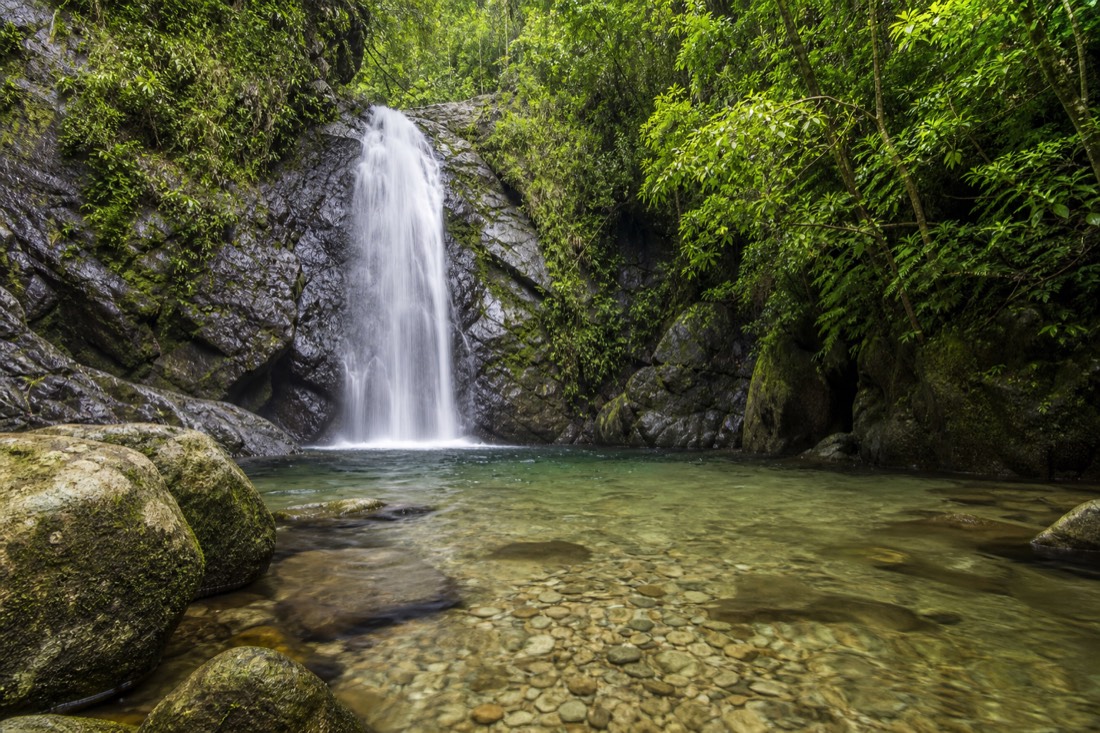
People arrive in the Daintree picturing a rainforest waterfall, but the scenery does not establish that getting into the water is safe. Some water here can be deadly, and appearance is not a reliable test. QPWS does not recommend swimming at Mossman Gorge, while any swim offered at a private location depends on the operator’s assessment of current conditions.
Booking Choice: For private waterfall access, start with the 2.5-hour Cassowary Falls UTV Adventure; it meets locally, and any swim requires operator approval and suitable weather and current conditions.
Check Dates For The Cassowary Falls UTV AdventureThere is no visual rule that can prove water is safe: crocodiles may occur in clear or freshwater, and currents, submerged hazards and recent rain can make a pool dangerous. Treat tidal, estuarine and coastal water as off limits for swimming, obey signs and closures, and follow current advice from land managers and activity operators. Below, where swimming is prohibited, where an operator may offer a condition-dependent swim, and why you should not judge unfamiliar water by appearance.
Where Can You Safely Swim In The Daintree?
No Daintree pool should be declared safe from its cold, clear or upstream appearance. Queensland Parks and Wildlife Service does not recommend swimming at Mossman Gorge because currents and submerged hazards are unpredictable. At private locations such as Cassowary Falls, swimming may be offered only after the operator assesses the weather and current conditions.
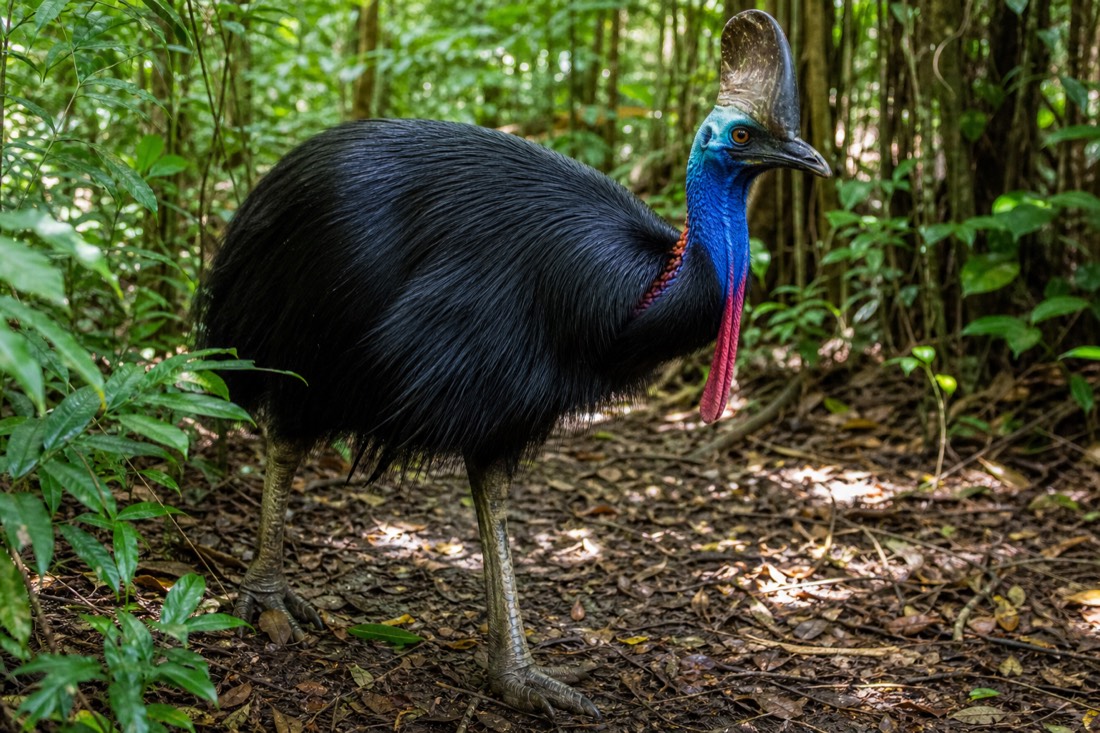
Mossman Gorge is a well-known visitor stop, and the Mossman River runs over smooth granite. However, Queensland Parks and Wildlife Service does not recommend swimming there because of unpredictable currents, submerged hazards and rapidly changing conditions. Visitors can still explore the freshwater setting at Mossman Gorge, but should obey all signs and closures and should not treat clear or calm-looking water as evidence that swimming is safe.
Another option is a guided visit to Cassowary Falls on private rainforest land. You reach it on a UTV run out to Cassowary Falls across private property. Swimming is optional and depends on the operator’s approval, weather and current conditions, so access does not guarantee a swim or establish that natural water is risk-free.
| Spot | Water type | Safe to swim? | How you reach it |
|---|---|---|---|
| Mossman Gorge | Freshwater river and granite gorge | Swimming not recommended by QPWS | Shuttle from the visitor centre, then a short walk |
| Cassowary Falls | Freshwater waterfall on private land | Only if the operator approves current conditions | Guided UTV trip on private land |
| Daintree River | Tidal, brackish to salt | Never | Cruise only, you stay in the boat |
| Estuaries and creek mouths | Tidal, salt | Never | Not a swimming place at all |
| Beaches and the sea | Salt water | No, crocodiles and stingers | Walk the sand, do not swim |
Where Can You Absolutely Not Swim?
Never swim in the Daintree River, in any estuary or creek mouth, or off the beaches. These are the habitat of estuarine crocodiles, which are genuinely wild and genuinely dangerous, and the coast carries marine stingers on top of that. Guides do not let clients swim in the river, and neither should you.
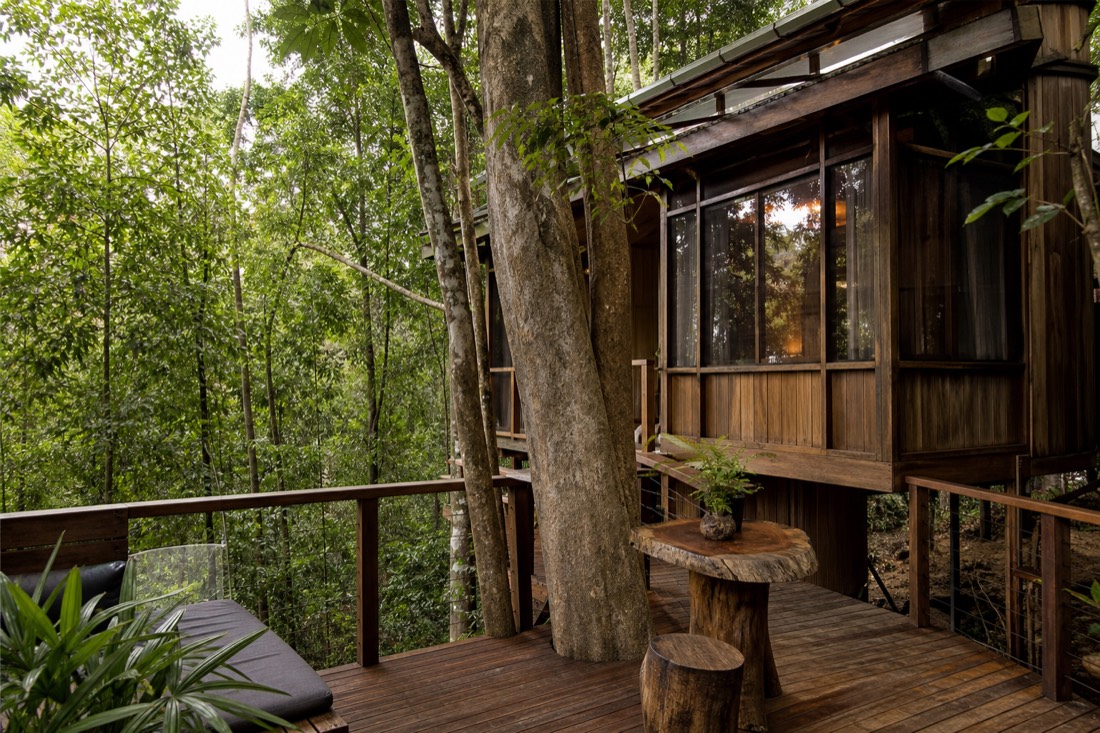
The Daintree River is not a swimming spot in any conditions, day or night, wet or dry. Estuarine crocodiles, the large saltwater species, live in it, and they are ambush predators you will not see coming. Cruises may look for crocodiles from the boat, but wildlife sightings are not guaranteed. The same danger extends to every estuary, tidal creek and the muddy mouths where rivers meet the sea, which is where crocodiles move between fresh and salt water. There is more on the animals themselves in our piece on the crocodiles in the Daintree River, and it is sobering reading.
The beaches look innocent and are not swimming beaches either. Saltwater crocodiles use the coast, and northern Queensland waters also carry marine stingers, including box jellyfish and the tiny Irukandji, whose season and risk you should check locally rather than guess. There are no netted, patrolled swimming enclosures up here the way there are on southern beaches. Walk the sand at Cape Tribulation and Myall Beach, take the photo, and do not swim, a point Tourism Australia's Daintree guide makes about the coast too. Do not treat inland or clear water as a safe fallback unless current signs or an operator expressly permit swimming in those conditions. If safety in general is on your mind, we cover how safe the Daintree really is separately.
How Can You Tell If Water Is Safe To Swim In?
You cannot establish that water is safe from its clarity, temperature or upstream position. Check current signs, closures and land-manager or operator advice, and do not enter unfamiliar water when swimming is not expressly permitted for the current conditions. When in doubt, stay out.
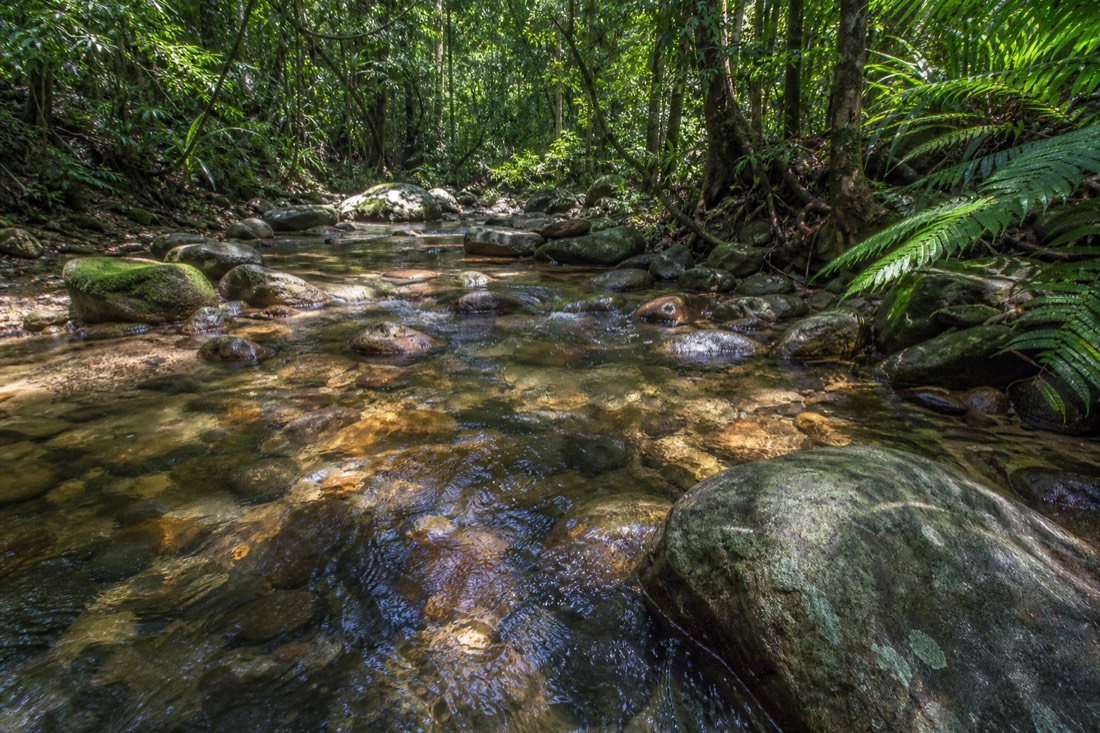
Elevation, clarity, temperature and salinity are not reliable proof of safety. Water that is tidal, estuarine or coastal should be treated as off limits for swimming, but crocodiles may also occur in freshwater and clear water. Heed every warning sign and closure, seek current local or operator advice, and do not assume a creek or pool is safe because of how it looks.
This is the single most important thing to understand before you visit, and it is why some people choose an operator-led activity. A guide can provide current instructions and assess whether an optional swim proceeds, but cannot guarantee that natural water is safe.
How Do You Reach The Safe Swimming Spots?
Mossman Gorge is reachable on a self-drive day via the shuttle or on a guided tour, but QPWS does not recommend swimming there. Cassowary Falls is reached through a guided trip onto private land, where an optional swim proceeds only with operator approval and suitable weather and current conditions. Never swim in the Daintree River, estuaries or coastal water.
For Mossman Gorge, you can drive up and take the shuttle, or join a guided small-group tour from Port Douglas, but QPWS does not recommend swimming in the gorge. Private-waterfall access may require a guide because the land is controlled, although that does not guarantee water safety. A full-day Cape Tribulation tour may list a private rainforest swim opportunity, but it remains subject to the operator and current conditions and is separate from Mossman Gorge.